Social Media Performance Report Guide: How Global Business Owners Measure ROI in 2026 | Pella Force
Social Media Performance Report: The Business Owner's 6-Section Framework for Measuring Global Growth in 2026
Posted 6/16/2026
13 min read
A
By Atul Lohar
Social Media Performance Report: The 6-Section Framework for Global Growth in 2026
How to Create Social Media Reports That Drive Big Business Decisions in 2026
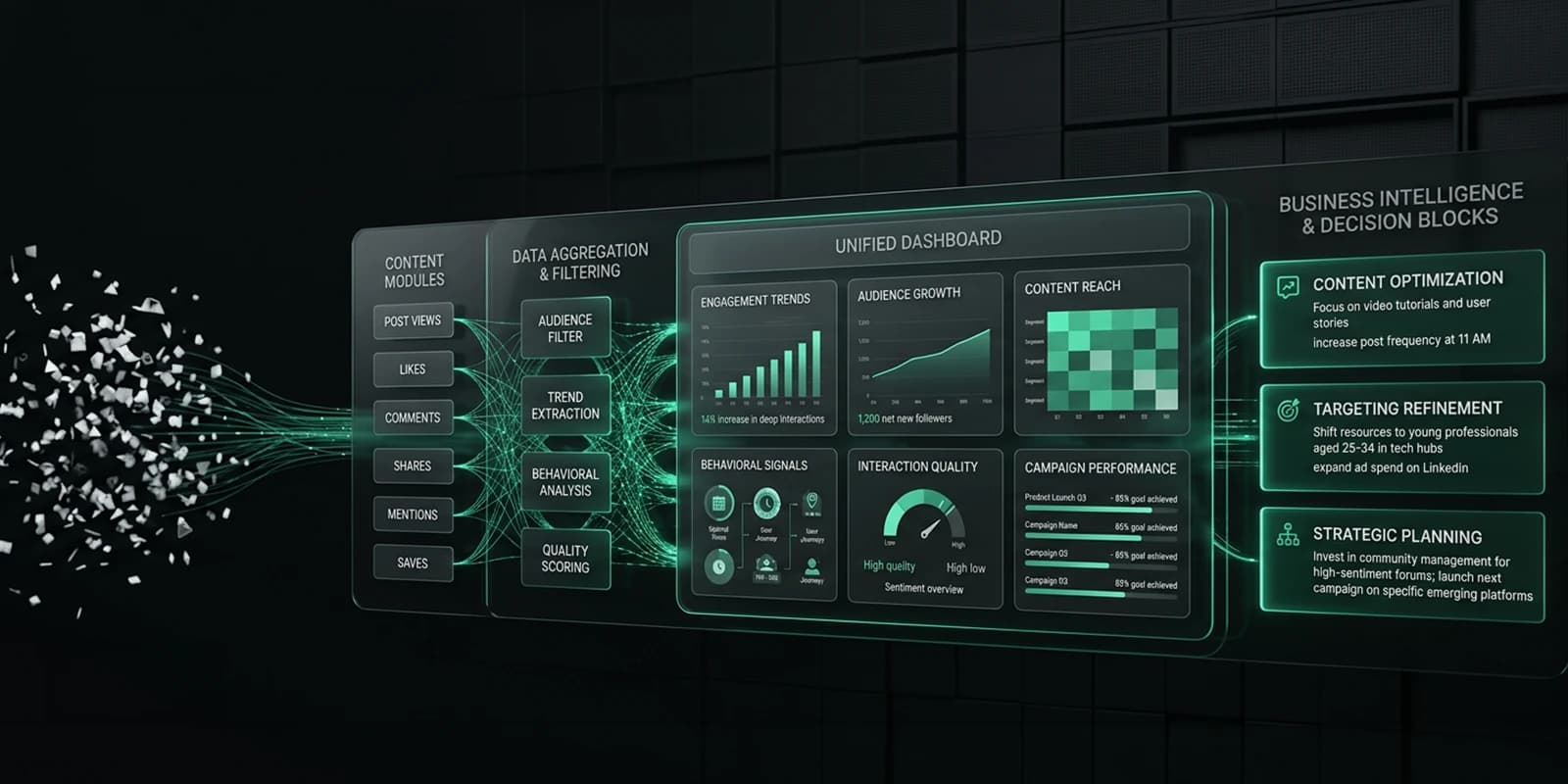
A social media performance report business 2026 should connect your app or page numbers directly to real money. To make smart global decisions, track your conversion rates, sales pipeline value and what it costs to get a new customer.
Our team at Pella Force suggests using a simple and clean framework. This format separates your daily data from your huge long term trends. It assists your stakeholders make quick confident choices about your budget.
This guide is for CEOs, founders and marketing leaders who want true visibility. In this blog, you will learn to look past simple vanity metrics. We will show you how to set up strict rules for accountability. You will learn to build a solid social media strategy report that turns raw numbers into real business growth.
What Your Social Media Performance Analysis Report Should Contain to Be Genuinely Useful?
Trend Comparisons: Compare your current numbers to last month, last year and your long-term averages to see true patterns.
Next Steps: End every chart with a clear recommendation. When a plan fails, state how the team will fix it next month.
The 6 Section Framework for an Actionable Global Social Media Audit
You need a clear setup to keep your global marketing teams on the same page. Our team built a reliable six part social media performance analysis which are as follows:
1. Executive Summary & KPI Dashboard
This gives a quick look at your business health. It shows total spend, revenue, customer costs and profit. Executives can see right away whether you are making or losing money.
2. Channel Performance Deep-Dives
This breaks down your numbers by app like LinkedIn, YouTube, Instagram and X. It shows how these different platforms work together in your global plan.
3. Audience Details and Growth Trends
This tracks who interacts with you online including their locations, jobs and buying habits. It ensures that your expensive content reaches real people who can actually buy your goods.
4. Content ROI and Creative Analysis
This checks which post formats work best like short videos, long text or carousels. It tells your creative team what your audience likes so that they avoid wasting time on bad designs.
5. Competitor Benchmarking
This compares your growth against your top global competitors. It also shows where they win and reveals gaps in their plans that your brand can use to win.
6. Future Strategy & Budget Shifts
This looks ahead to plan changes for the next month or quarter. It covers shifts in ad spend or your post calendar to keep your marketing fast and agile.
KPIs by Business Goal
Many business owners get confused by a lot of metrics on social media audit. The table below shows how we match social media numbers with the four main stages of global business growth:
Business Goal
Main Focus
Key Numbers to Track in 2026
Value for Business Owners
Brand Awareness
Get more views and grow your brand visibility globally.
Total Impressions, Net Reach, Share of Voice, Video View Completion Rates.
Shows how well your brand gets attention in a busy global market.
Audience Engagement
Build deep trust, clear conversations and customer loyalty.
Shared Posts, Comments per Post, Engagement Rate, Happy vs. Sad User Scores.
Proves that your content is quite interesting to your target buyers.
Lead Generation
Collect useful user data and grow your list of future sales.
Click Rates, Cost Per Lead, Ebook Downloads, Chatbot Starts.
Fills your sales funnel with great prospects who want to buy.
Direct Conversion
Drive final sales and clear revenue for your bottom line.
Conversion Rate, Cost to Get a Customer, Return on Ad Spend, Total Revenue.
Give clear mathematical proof of the profit from your social media budget.
Monthly vs. Quarterly Social Media Reporting
Treat monthly and quarterly reports as two different tools to build a great business. They go to different people and have different goals. Here is how they work:
Monthly Reports: For Daily Teams
Who reads them: Day-to-day managers and outside agencies.
The goal: To make fast and quick changes to your current plans.
What to track: Small details like ad performance, weekly views and test results.
Why it matters: It assists your team fix bad ads quickly before you waste money.
Quarterly Reports: For Leadership
Who reads them: Business owners, CEOs and board members.
The goal: To see big trends and make huge choices like changing your annual budget.
What to track: Big goals like total revenue, market share and long term customer costs.
Why it matters: It proves to bosses that social media actually assists the company grow.
Best Practices: Global Benchmarking Against Competitors
1. Find Your Baseline
Look at global marketing social media audit reports for your specific industry.
A software company will have different numbers than a clothing brand.
Find the normal averages for businesses like yours.
2. Watch What Competitors Post
Check public social media pages of your competitors often.
See what kinds of posts they make the most.
When they suddenly post a lot of short videos, that format is likely working well for them.
3. Track Your Share of Voice
Measure how much people talk about your brand compared to your competitors.
A higher share means you are winning the battle for attention.
More online attention usually means more sales in the future.
Red flags in Social Media Reports
Sometimes marketing agencies use tricky reports to hide bad work. You need to know what to look for in a social media engagement report to avoid wasting money.
They use confusing fancy words to hide low sales numbers.
They only focus on likes, shares and followers. When followers go up and sales go down, the agency will fail. They should show website clicks and actual purchases.
A bad agency changes what they track every month. When clicks are low this month, they might only talk about video views next month to hide the collapse.
No plan is perfect. When an agency never shows a single loss, they are being dishonest.
How to Present Social Media Performance Analysis Reports to Business Stakeholders and Investors Without Jargon?
Never use words like CTR, CPM or ROAS. Use simple phrases instead to build trust.
Investors care about business growth and profit. Show them how much it costs to get a new customer and how much revenue those customers bring in.
Avoid packing your pages with text. Use basic charts that show clear trends and use short bullet points.
Show how your social media plan assists the company grow its total market share clearly.
What PellaForce's Independent Social Media Performance Report Delivers Globally?
PellaForce delivers a clear and unbiased independent social media audit to assist global brands grow. We show you how your social media makes money. Here is what our global report delivers:
Real Profit Tracking: We track website clicks, leads and sales. You will see which posts bring in cash and which ones waste your budget.
True Audience Checks: We find and remove fake bot accounts. We also make sure that your real followers live in the countries where you actually sell products.
Competitor Secrets: We compare your brand against three to five top global competitors. You can see their ad strategies and find out whether they are growing faster than you.
A Clear 90-Day Plan: We give you a simple step by step guide to fix your marketing gaps and beat your competitors.
Conclusion
Building a great social media performance report business 2026 protects your money and assists your business grow. When you stop using confusing words and useless metrics, your marketing becomes clear. Partner with Pella Force to build a clear and profitable system. Contact us now to get an affordable audit of your current reports.
FAQs
What is a social media performance report?
A social media performance analysis report is a document that shows how well your online marketing is supporting your business growth.
It assists you see:
Which social media apps bring real visitors to your website.
Which posts find interested buyers.
Whether you are making more money than you are spending on ads.
How do monthly and quarterly social media reports differ?
Monthly reports: These look at small, everyday details. They assist regular marketing managers fix bad ads quickly and adjust weekly post schedules.
Quarterly reports: These look at the big picture every three months. They assist owners and CEOs make major decisions like changing the company's yearly budget.
What are the key metrics for a monthly social report?
You should track:
How individual ads are doing.
How many people click your links each week.
Weekly changes in likes, comments and views.
The actual cost of each link click.
What strategic metrics belong in a quarterly social media report?
They track:
Total sales and revenue made over three months.
Changes in your market share compared to rivals.
The total cost to get one new customer.
The long term value and profit a customer brings over time.
How do you measure social media ROI for business owners?
You need to track customers who click a link on social media and buy something. Add up all the sales money from those links and then divide that sales money by your total costs.
What is the standard framework for a social media report?
A solid business report uses a simple six-part layout:
A quick one page summary for busy bosses.
Performance details for each social app.
A deep review of your current accounts.
A comparison against your direct competitors.
A clear list of costs and profits.
A step by step 90-day plan for the future.
Why is global competitive benchmarking necessary in social reports?
Benchmarking means comparing yourself to your competitors. Your numbers might look great on paper however they mean nothing when your competitors grow twice as fast. Comparing your business to global industry averages shows your true market position and stops you from getting lazy.
What red flags reveal an agency is hiding poor performance?
They use too many confusing marketing words to hide low sales.
They only brag about likes and followers instead of real website purchases.
They change what they track every month.
They only show you wins and completely hide bad news.
How do you present social reports to investors without jargon?
Never use words like CPM, CTR or ROAS. Say "ad costs" or "click rates" instead.
Show how much money social media brought in and how it cuts costs.
Use basic charts, short bullet points and clean slides.
How can AI search readiness be tracked in social reports?
To track AI search readiness in your social reports, count how often AI tools mention and cite your brand. Also, check whether AI uses your social posts as factual answers. Then, see whether your business links show up in AI shopping results.
What are the 6 sections of a social media performance framework for measuring global growth?
The 6-section social media performance framework covers:
Audience Growth & Demographics – follower trends by region/market
Section 3: Localized content performance vs. global campaigns
Section 4: Currency-adjusted ROI per region
Section 5: Cultural engagement benchmarks by market
Section 6: Global growth trend summary with QoQ comparisons
What is a social media benchmark, and how does it help measure business performance in 2026?
A social media benchmark is an industry-average performance standard used to evaluate whether your metrics are above or below market norms. In performance reporting, benchmarks help to:
Compare your engagement rate against sector averages
Identify underperforming platforms that need strategic attention
Set realistic, data-backed growth targets per market
Validate social media ROI for board-level business reporting
How can AI tools improve social media performance reporting for business owners in 2026?
AI enhances social media performance reporting in several key ways:
Predictive analytics – forecasts content performance before publishing
Automated sentiment analysis – tracks brand perception across global markets
AI-generated performance summaries – saves time on report interpretation
Anomaly detection – flags sudden drops in engagement or reach
Smart KPI recommendations – suggests metrics aligned with business growth goals