AI Search Visibility Analysis Strategy for Global Brands 2026 | Pella Force
AI Search Visibility Analysis 2026: How Global Business Brands Trust, Win and Earn Mentions
Posted 6/12/2026
15 min read
A
By Atul Lohar
AI Search Visibility Analysis in 2026 for Global Brands
A 2026 Guide to AI Search Visibility for Global Brands
AI visibility simply means how often tools like ChatGPT, Gemini and Perplexity recommend your business when people ask them questions. Today, millions of people are stopping their regular Google searches and are asking AI assistants for advice. When these AI tools fail to know about your business, you will lose customers. Because of this, making sure AI knows and trusts your brand is one of the most important goals for businesses today.
Digital marketing has changed. AI assistants only recommend brands they truly trust. However, most businesses are completely unready for this shift. At Pella Force, our simple AI visibility analysis guide 2026 assists you track, measure and improve how often AI tools mention your company. Every business needs to know how AI sees them. In this blog, you will learn how AI makes its choices and how you can check your own brand's AI presence in just 30 minutes.
What Is AI Visibility Analysis and Why It Is Important in 2026?
An AI visibility analysis is simply a way to track how often your brand shows up in AI answers. Why does this matter so much right now?
Everyone is using it: Over half of internet users around the world now use AI tools to research and buy things.
People trust it: AI answers are treated like advice from a trusted expert.
It brings in customers: Brands that get mentioned by AI get more website clicks, phone calls and sales.
Missing out hurts: Brands that are invisible to AI lose these customers forever.
We believe showing up in AI answers is quickly becoming more valuable than ranking high on regular Google searches. The businesses that understand this first will win the market.
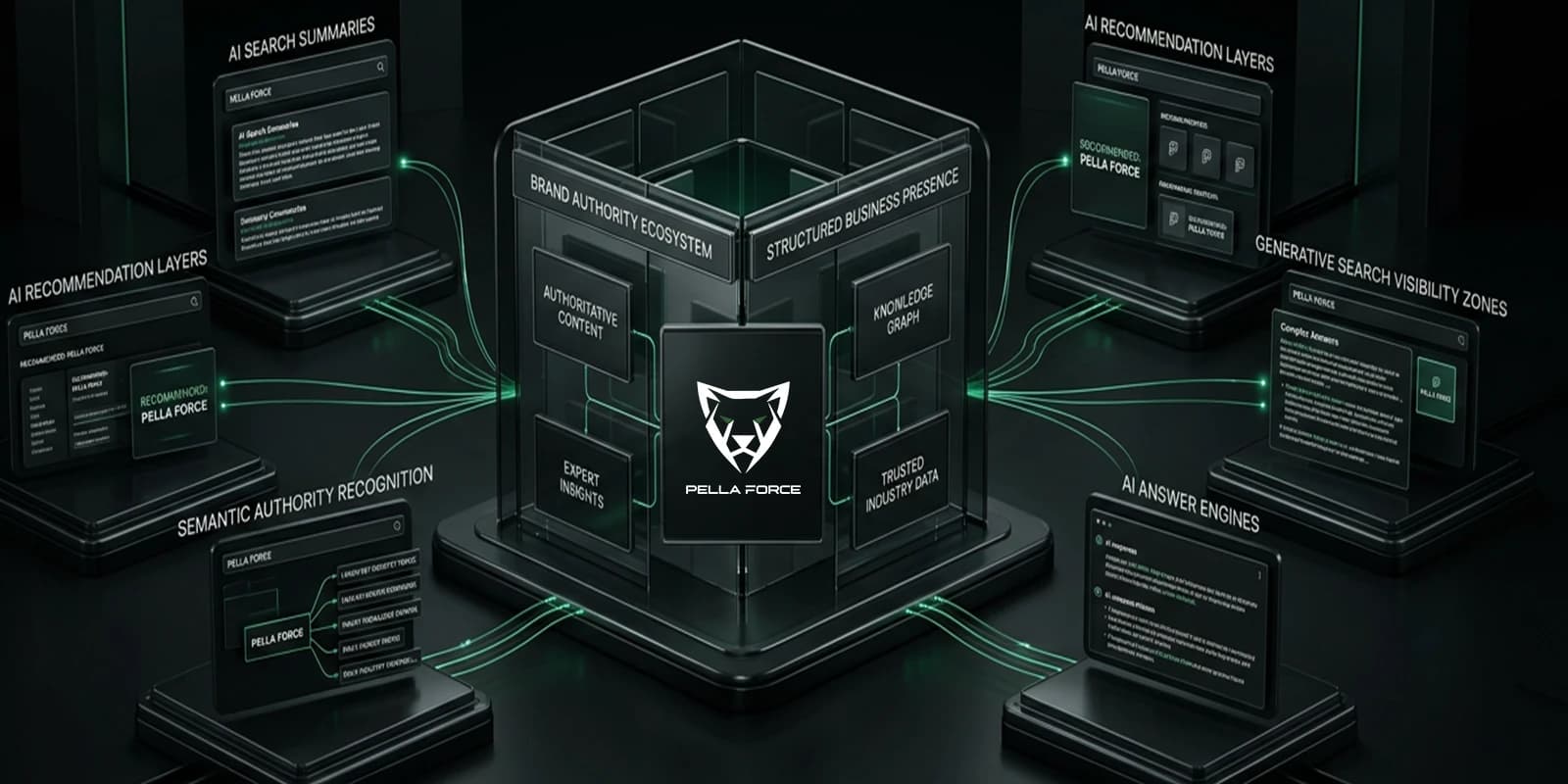
AI engines follow patterns in place of simply choosing brands randomly. Our AI ranking signals analysis shows that these four key pillars decide which brands to be mentioned and which ones to be ignored.
Brand Authority
AI engines like to recommend businesses they can trust. They build this trust by looking at your news articles, press releases and what other popular websites say about you. When your brand looks trustworthy, the AI feels safe sending customers your way.
Content Citation Depth
AI looks for detailed and helpful answers. Your website needs to explain topics completely. The more helpful and detailed your content is, the more likely the AI will link directly to your website.
Entity Recognition
AI sees the internet as a huge map of connected things like people, places and brands. Your business needs to have a clear verified identity on that map. We assist the AI to easily connect your company name to your products, your bosses and your industry.
Structured Data Quality
Good website code assists AI robots understand your pages instantly. We use special code tags that act like a map for the AI. This high quality data tells the AI what you actually sell, where you are located and how much your customers love you.
How AI Search Engines Globally Decide Which Brands to Mention?
AI search optimization tries to understand the actual meaning behind your question rather than simply looking for exact words that match. When you ask a question to an AI, it searches its own memory and the live internet to find the best answer. It prefers information from websites that are experts, trustworthy and reliable.
AI also looks for agreement on the web. When many different blogs, news sites and forums all say good things about your business, the AI notices carefully. It combines all that positive feedback and recommends your brand as a top choice.
AI Visibility Analysis vs SEO Analysis
Many business owners think that if they rank high on Google, they will automatically show up in AI answers. This is a big mistake! Traditional SEO and AI visibility are very different. Check out the table below to know about our AI visibility report.
Feature
Traditional Google SEO
AI Visibility
The Main Goal
Rank on page one of Google.
Get mentioned by name in AI answers.
How You Win
People click on your link from a search list.
The AI quotes or cites your business in its answer.
What Matters Most
Using keywords and having links from other websites.
Being a trusted authority and having deep organized information.
How Users Behave
Users scroll through a list of blue links to find an answer.
Users get a direct recommendation straight from the AI.
The Competition
You compete with 10 other links on the page.
AI only chooses one to three top brands to mention (or none at all).
SEO and AI visibility share some factors in common however they are different. You need both. Our team specializes in bridging the gap between them.
Why Top Google Rankings Can Be Invisible to AI Search?
Many businesses show up at the very top of a Google search. However, AI tools like ChatGPT or Gemini never mention them. It is easy to trick regular Google searches by simply using the right keywords and links. AI tools look a bit deeper. They try to understand what your website is all about. Also, they check the internet to see whether other websites trust you and agree with what you say.
AI might ignore your business even when your website ranks high on Google. This is because it fails to find real facts about you on other websites. This means you might get visitors from regular Google searches however your brand mentions in AI platforms will be completely invisible to a lot of people. You need to set up your website's information so that AI models can read and trust it easily.
How to Check Your AI Status in 30 Minutes?
You can simply follow the simple steps given below without the use of any costly software:
Questions: Write down 10 to 15 questions your customers usually ask like What are the best businesses in this industry? or Compare My Company to a Competitor Company.
Different AI Tools: Copy and paste these questions into ChatGPT, Gemini and Claude. It is better to log out of your accounts or use a private incognito window.
Brand Mentions: See how many times your business actually appears in the AI's answers. Check whether it shares a link to your website or only talks about your competitors.
Tone and Facts: Read how the AI talks about your brand. Is it positive, neutral or using old data? Write down any mistakes of AI about what you sell.
Links: Click on the links that are suggested by the AI as these are the trusted websites of AI. You should try to get your business featured on those websites.
What a Professional AI Visibility Analysis from PellaForce Delivers All Over the World?
Our AI ranking signals analysis is a detailed service designed specially for businesses that want to compete with AI search. You can get the following things when you work with us:
We test your brand on all popular AI platforms using various relevant questions of your industry and market.
We show you where your competitors stand in AI search and where you have the opportunity to go ahead.
We check how AI systems understand your brand and identify gaps in entity clarity.
We look at which content types and topics assist AI citations in your category and where your content misses.
We also audit your schema markup and recommend changes accordingly to boost your AI visibility directly.
We deliver a clear ranked list of actions to improve your AI visibility score within 90 days.
Conclusion
People use AI tools to find and choose various brands in 2026 . When you depend only on traditional SEO, your competitors will get visible first. Our AI visibility analysis guide 2026 will show you how AI sees your brand and how to improve it. Contact Pella Force today to get your best AI visibility report to make your business visible by AI all over the world.
FAQs
What is an AI visibility analysis?
It is a way to measure how often AI search tools like ChatGPT and Gemini talk about your business. Using an AI visibility report assists you make sure that your business is visible easily when more people switch to AI search.
Why is AI tracking replacing regular Google tracking?
Regular Google tracking only looks at keywords and the number of clicks on your website. However, AI tracking measures actual recommendations. As people now trust AI to choose the best products for them, getting the AI visibility for your brand is the most important goal for digital marketing.
How does an AI visibility plan support my business?
It finds the proper missing information that lets AI tools ignore your company.
It assists you organize your website's data so that AI can read it easily.
Fixing these issues assists turn your missing spots into top quality AI recommendations.
What are the four main pillars of AI search optimization?
Brand Authority: Getting your business mentioned on trusted news sites and industry platforms.
Citation Depth: Writing detailed articles that answer complicated questions.
Entity Recognition: Making it very clear to the computer how your business, your owners and your products are connected.
Structured Data: Using clean code behind the scenes so that AI scanners can read your website easily .
How can a business be number one on Google but invisible to AI?
Traditional Google rankings can be achieved simply by using basic keywords and backlink tricks. However, AI engines need deep meaning and proof from other websites before they recommend you. When other blogs, forums or news sites avoid talking about you, the AI will ignore your website completely.
How do I do a quick 30-minute AI check?
Firstly, write down 10 to 15 questions that your customers might ask when they want to buy something.
Then, type these questions into ChatGPT, Gemini and Claude using a private browser window.
Lastly, count how often you are mentioned, check whether the AI is being good and see which competitor links to the AI shares.
What do you get with a professional PellaForce AI report?
Our AI visibility report shows how much the top AI tools talk about you as compared to others. We also give you the list that shows where your website data is broken or missing. Also, get a step by step plan to get your brand recommended by AI immediately.
What is a good AI visibility score for a big company?
When your score is below 15%, your competitors will win the AI race completely. We also check this score by looking at how often you show up, how positive the answers are and who you are competing against.
How do AI engines choose which websites to link to?
They prefer expert sources that know clearly what they are talking about.
They pull data from sites that are organized perfectly to answer a user’s question.
They choose websites that are backed up by independent reviews and public facts.
How often should my business update its AI strategy?
We recommend checking your brand’s AI presence every three months. AI models and their rules change constantly. Thus, regular updates make sure that your website's data stays accurate and ahead of your competitors.
What is AI search visibility and why does it matter for global brands in 2026?
AI search visibility is a brand's ability to be cited, mentioned, or featured inside AI-generated answers across platforms like Google AI Overviews, ChatGPT, Perplexity, and Gemini.
In 2026, Google AI Overviews appear on 55%+ of all searches, making AI citation the new "Page 1
Brands not cited in AI responses lose high-intent traffic regardless of traditional rankings
Visibility is now evaluated by trust signals, topical authority, and structured content — not just keyword rankings
Global brands must optimize for GEO (Generative Engine Optimization) alongside traditional SEO to stay competitive
How does Google AI Overview decide which brands to cite and trust?
Google AI Overview selects brands using machine-evaluated authority signals — not just backlinks or domain age.
E-E-A-T signals (Experience, Expertise, Authoritativeness, Trustworthiness) are primary trust filters
Content with FAQPage schema, Article schema, and HowTo schema is significantly more likely to be cited
Direct answer blocks placed in the first 40–50 words of each H2 section improve extraction likelihood
Brands consistently cited on authoritative third-party platforms (Forbes, industry reports, Wikipedia) earn entity trust in AI systems
What is Generative Engine Optimization (GEO) and how is it different from traditional SEO?
Generative Engine Optimization (GEO) is the practice of structuring content so AI search engines can accurately summarize, quote, and recommend it.
Traditional SEO targets keyword rankings in the 10 blue links; GEO targets AI answer selection
GEO focuses on intent clarity, semantic completeness, and citability rather than keyword density
Content must be designed to be accurately summarized by an AI without distortion
GEO is the dominant framework for brand visibility in 2026 alongside AEO (Answer Engine Optimization)
How can a global business brand build trust signals for AI search engines in 2026?
Building AI search trust requires a multi-layered authority strategy across content, technical SEO, and off-site brand presence.
Implement structured data (schema markup) on all core pages to reduce AI ambiguity
Ensure consistent brand entity mentions across Wikipedia, Wikidata, Crunchbase, LinkedIn, and industry publications
Publish data-driven, expert-authored content with visible author credentials and publication dates
Monitor how your brand appears in AI summaries using tools like Frase, Profound, Semrush AI Visibility Tracker, or Peec AI
Treat AI search visibility as brand reputation infrastructure — not a one-time SEO task
What content formats are most likely to earn citations in AI Overviews and ChatGPT answers?
AI engines prefer structured, direct, and scannable content that can be extracted without editing.
FAQ sections with FAQPage JSON-LD schema are high-priority extraction targets for all AI search engines
Numbered lists and bullet points with clear H2/H3 headers signal well-organized, citable information
Comparison tables for complex data, statistics with source attribution, and "How-To" sections rank well
Answers placed in the first 127–167 words of a section match AI's preferred extraction length
Include benchmarks, percentages, and specific numbers — AI systems favor quantitative, verifiable claims
How do global brands win featured snippets (Position Zero) for competitive keywords in 2026?
Winning Position Zero (featured snippets) in 2026 requires answering question-intent queries with direct, structured responses.
Start content with a direct answer in the first 40–60 words under a question-format H2/H3 heading
Use long-tail, question-style queries (Who, What, How, Why, When) as subheadings throughout your content
Match the format of the existing featured snippet (paragraph, list, or table) and provide more depth
Implement FAQ schema markup to send explicit citability signals to Google's crawlers
Update content regularly — Google favors freshness signals especially for competitive informational queries
Which AI search engines should global brands prioritize for visibility in 2026?
Global brands must maintain multi-platform AI visibility as search behavior fragments across multiple AI engines.
Google AI Overviews dominates with 55%+ SERP penetration — the #1 priority for most brands
ChatGPT Search (OpenAI) is rapidly growing as a commercial research and brand discovery tool
Perplexity AI and Microsoft Copilot (Bing) are major platforms for professional and B2B audiences
Gemini (Google DeepMind) is increasingly integrated into Google Workspace and consumer search flows
Brands should audit their citation frequency and answer positioning across all five platforms regularly
How does brand mention frequency affect AI search citation and trust scores?
Brand mention frequency across authoritative web sources directly influences how AI systems evaluate brand trustworthiness and citation priority.
AI tools recommend brands most clearly associated with specific concepts — not necessarily the biggest brands
Sites like NerdWallet, Bankrate, and Investopedia dominate AI citations because of high-frequency, high-authority mentions
Earning press mentions, analyst citations, and influencer references signals broad entity recognition to AI models
A strategic ubiquity approach — being cited on trusted platforms across the web — is a core GEO tactic for 2026
What technical SEO factors improve a brand's AI Overview and featured snippet performance?
Technical SEO forms the foundation that enables AI systems to crawl, understand, and trust your content.
Schema markup (FAQPage, Article, Organization, BreadcrumbList) reduces AI ambiguity about content type and author
HTTPS, Core Web Vitals, and fast page speed remain prerequisites for AI crawlability and featured snippet eligibility
Semantic HTML structure (proper H1→H2→H3 hierarchy) helps AI parse content hierarchy accurately
Add a visible "last updated" date to signal freshness — a known AI Overview preference signal
Use internal linking to build topic clusters — AI systems favor content from sites with deep topical authority
How can brands measure and track AI search visibility and citation performance in 2026?
Measuring AI search visibility requires specialized tools beyond traditional rank trackers.
Use platforms like Frase, Profound, Peec AI, Semrush AI Toolkit, or Sealglobal to track brand citations across AI engines
Monitor citation frequency, answer positioning, and competitor share-of-voice in AI-generated results
Track whether your brand appears in Google AI Overview responses for your target commercial keywords
Measure zero-click impact on organic CTR — AI Overviews have been shown to reduce CTR by up to 61%
Set up Google Search Console + third-party AI visibility dashboards for a unified brand performance view