Social Media Analysis Boosts ROI Across Marketing Campaigns | Pella Force
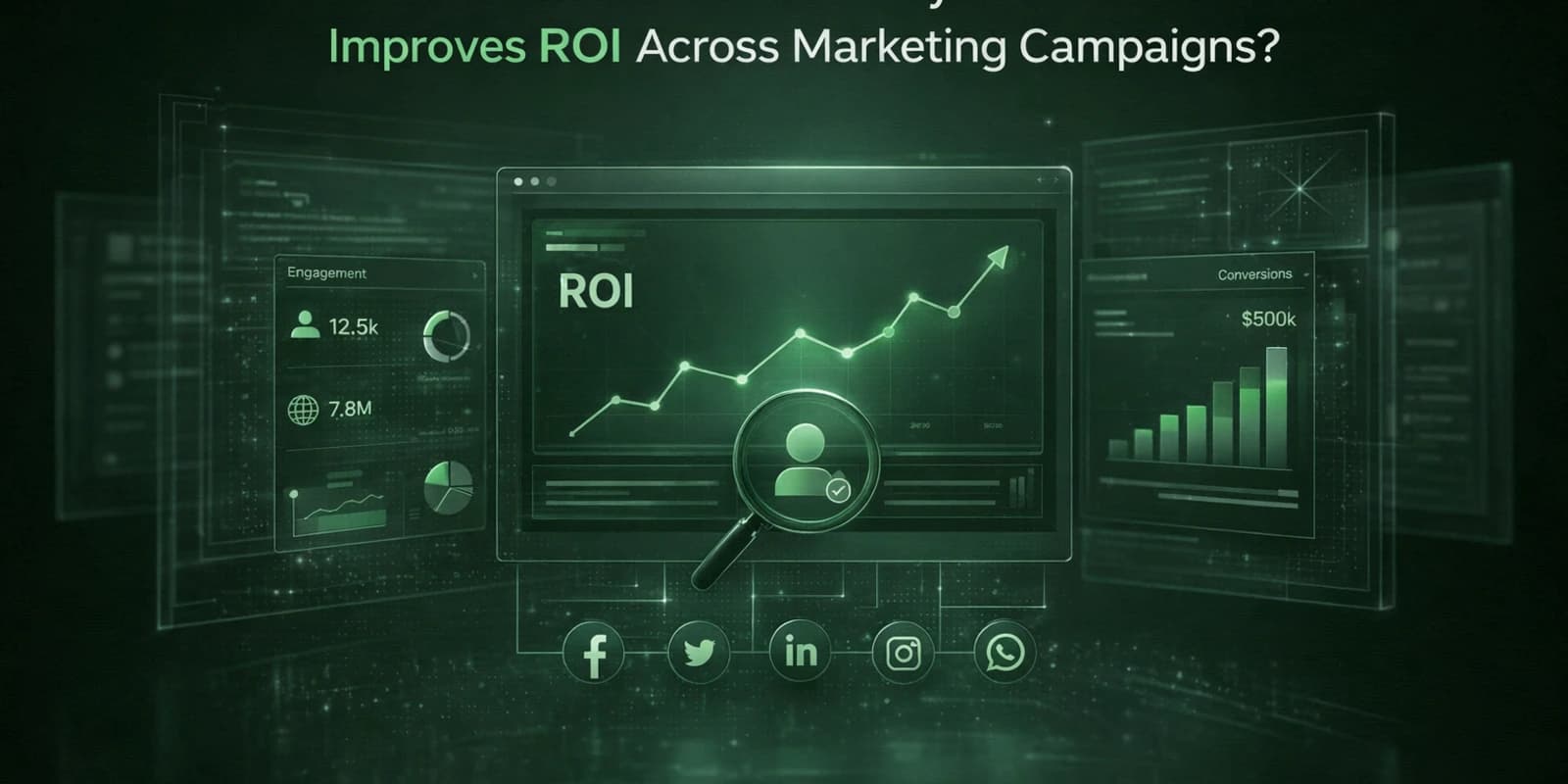
How Social Media Analysis Improves ROI Across Marketing Campaigns?
Posted 4/8/2026
10 min read
A
By Atul Lohar
How Social Media Analysis Improves Marketing ROI: A Complete Guide
An Overview
Social media analytics is the practice of collecting and structuring data gathered from all of the brand's social channels. This structured data supports brands in taking measurable actions that lead to strategic business decisions. Specialised analytical tools like Pella Force run the analysis systematically and generate social media reports for diverse brands.
We collect, monitor and infer data from social platforms like Facebook, Twitter, and Instagram to deliver actionable insights. These assist in measuring performance and manoeuvring brand strategies. Curious to know how we conduct social media analysis seamlessly and make brands powerful and popular? Take a look.
Benefits of Social Media AnalysisSocial media analysis boosts productivity and ROI and enhances brand reputation. It also assists brands in refining and repositioning their marketing strategies. A glance at the benefits delivered by Pella Force in its social media analysis report.
Boost Customer Reach
Pella Force throws a spotlight on the customer’s journey and engagement with the brand. With our social media report, we empower brands to engage with their target group and boost their social presence. We specialise in monitoring engagement rate to see how people are involved with the brand’s content and campaigns. Thus, these analytical reports boost maximum customer reach and visibility.
With powerful analytical tools, brands get an in-depth idea of their customer reviews and can craft strategies to improve the quality of their products and solutions. This assists the brand to identify the areas of improvement, make them work in those spaces and eventually enhances the productivity and profitability.
Power Up Strategic Decision-Making
Our social media analysis also facilitates trend analysis and the identification of high-value propositions for a brand. It gauges responses to social media and other communications, empowering the brand with measurable and constructive decision-making to boost productivity.
Analysis of Potential Competition
Utilising our social media analytics tools, brands can identify potential competitors in the market. It assists in focusing on methodologies and marketing solutions to achieve better results. Our comparison charts provide actionable insights about the organisation's brand and its standing relative to competitors in the market.
Key Aspects of Social Media Analysis
Core Function:
This process emphasises gathering and converting raw information into measurable insights that deliver informed and well-structured decision-making.
Key Metrics Tracked:
Social media performance metrics monitor user emotions and attitudes. The key areas for monitoring are:
Audience reach and engagement
Actionable insights, such as demographics
Competitor analysis
Sentiment analysis to assess
Analytical Techniques:
Pella Force encourages natural language processing, machine learning, and data visualisation to analyse both unstructured content, such as text and images and structured data, clicks and likes.
Key Advantages:
We assist brands in boosting product quality, strengthening brand loyalty, proactively managing crises, and gaining a deeper understanding of user needs and preferences. We also facilitate competitor social media analysis to track and identify areas of improvement and craft strategic solutions.
How Social Media Analysis Improves ROI Across Marketing Campaigns?
Our social media analytical excellence empowers brands to work around the ROI of marketing campaigns. It guides brands to boost their ROI by:
Enabling brands identify top-performing content
Monitoring data-driven optimisation
Reallocating marketing budget from ineffective to high-performing channels
Targeting audience for maximum reach
Enhanced Targeting and Personalisation: Our analytical data facilitates to identify specific customer segments, which empowers brands to develop and curate audience-relevant messaging. This report guides the brand to increase engagement and sales conversion rates.
Predictive Analytics and AI: Equipped with our detailed analysis, we make brands forecast future performance based on historical data. This enables proactive decision-making and better strategic planning to boost the ROI on marketing solutions.
Trend Mapping: To augment the ROI components, we make brands monitor their domain of specialisation and recent trends adopted by the competition. This makes them connect with a wider section of the audience before the trend fades away.
Optimised Resource Allocation: Data retrieved by social media performance audit identifies the platforms and campaigns that generate the maximum return. It allows brands to reallocate budget from underperforming areas to high-yield ones, boosting ROI eventually.
Targeted Content and Campaigns: We make brands transform actionable insights into audience preferences and behaviours. Thus, brands create and curate highly relevant, engaging, and tailored content, maximising ROI with higher conversion rates and sales. Unlike traditional methods, social media analytical data allows for effective marketing campaigns.
Improved Brand Sentiment and Loyalty: Pella Force monitors user sentiments and boosts ROI by improving brand perception. This ensures brand loyalty and boosts customer lifetime value.
Competitive Benchmarking: We also ensure that analysing competitors' strategies and guide brands to identify gaps in the market. Our reports surface new opportunities to improve ROI by identifying gaps that competitors have missed.
Enhanced Customer Assistance: Our social media performance audit report prevents reputation tampering and strengthens customer satisfaction. We ensure brands respond to customer issues proactively.
Final Thoughts
Social media analysis guides brands to structure, segment and interpret data extracted from all social media platforms. The social media reports, generated by Pella Force, deliver analytical excellence in brand positioning, understanding user behaviour, engagement and sentiments and prioritising marketing campaigns and solutions. Our detailed audit and analysis make brands optimise marketing strategies based on measurable insights. This assists them in generating smarter and data-powered decisions for boosting ROI across marketing solutions. When you have a brand in the kitty that needs analytical assistance and guidance to boost ROI and visibility, engage with Pella Force for the next-level experience.
FAQs
How does audience sentiment analysis impact ROI boost and marketing campaigns?
Audience sentiment analysis showcases how customers feel about a brand or a marketing campaign. This empowers brands to refine messaging and manage reputation to boost ROI growth.
What are the steps of social media analysis?
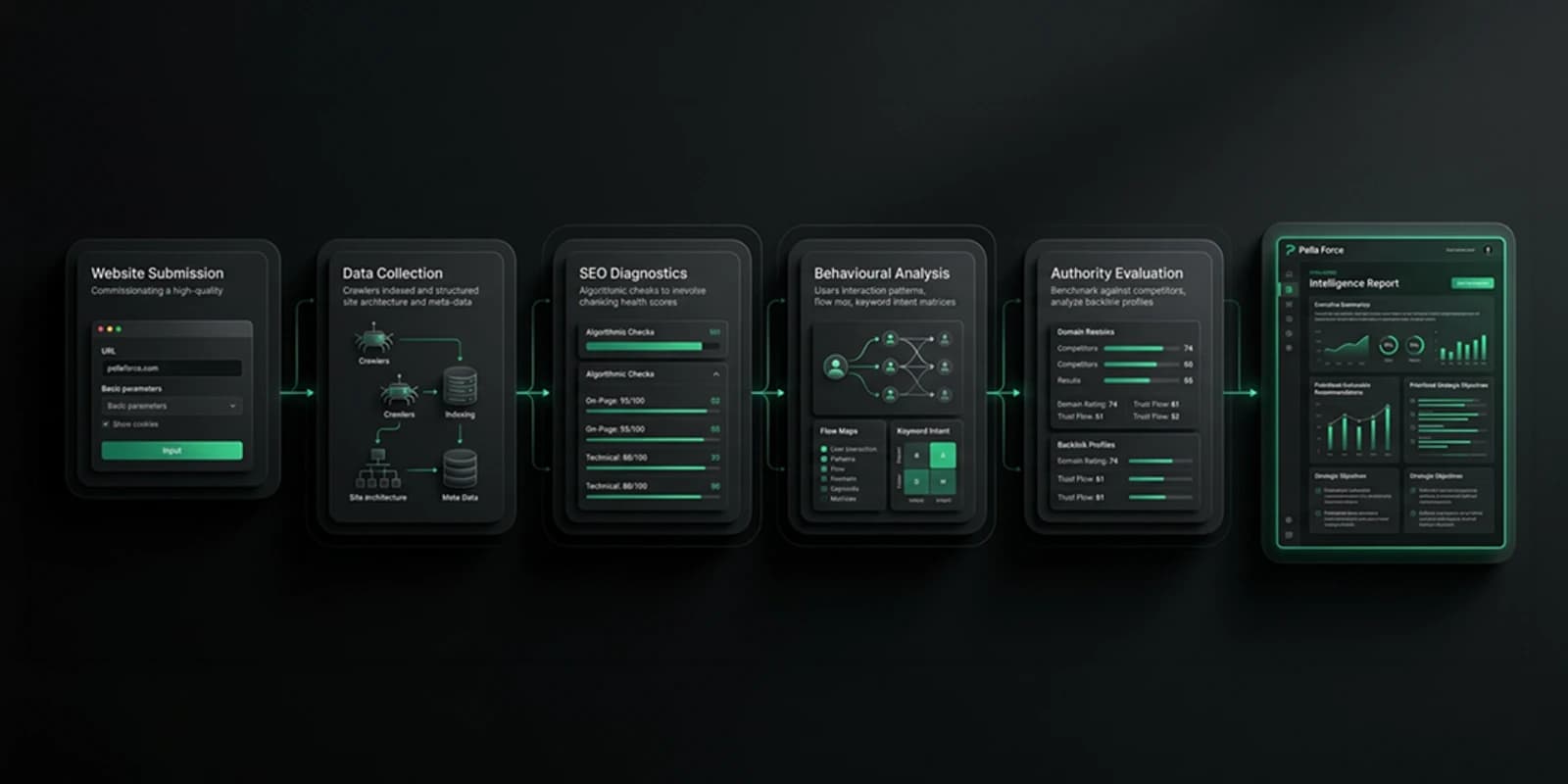
Pella Force conducts social media analysis, adhering to a few important steps. Defining goals and objectives, mapping the target audience, performing social media and competitor analysis, and monitoring customer engagement are some of our steps.
How does social media analysis combat crisis management?
We conduct social media performance analysis to assist brands in detecting the gaps in marketing campaigns, monitoring competitors’ advantages and protecting the brand’s image and reputation.
Is social media analysis functional for small businesses?
Yes, social media analysis fosters small, medium and large businesses. Our analytical excellence and insights empower small businesses to allocate marketing budget wisely, work on audience engagement and boost ROI.
What is the difference between a social media audit and analysis?
A social media audit is a periodic, holistic review of all platforms to check brand consistency and evaluate overall strategy performance. On the other hand, social media analysis is the ongoing process of structuring and interpreting raw data to understand customer behaviour and make informed, real-time marketing decisions.
How does social media analysis directly improve ROI in marketing campaigns?
Social media analysis improves marketing ROI by identifying which campaigns, content types, and audiences generate the highest returns — eliminating wasted spend and scaling what works.nudgenow+1
Tracks conversion paths from social touch points to purchases
Reveals best-performing content formats (video, reels, carousels) per platform
Reduces Cost Per Acquisition (CPA) by cutting underperforming ad sets
Links social activity to revenue KPIs using UTM attribution
What is social media ROI and how is it calculated for marketing campaigns?
Social media ROI measures the revenue or value generated from social media efforts relative to the total cost invested in those campaigns.
Formula: ROI = (Return − Investment) ÷ Investment × 100
Return includes leads, sales, sign-ups, and brand value gained
Investment covers ad spend, content creation, tools, and team hours
Use UTM parameters + Google Analytics to track revenue attribution
Benchmark positive ROI at any percentage above 0%
Which social media analytics metrics have the highest impact on campaign ROI?
The highest-impact social media metrics for ROI are conversion rate, cost per lead (CPL), and customer acquisition cost (CAC) — all tied directly to revenue outcomes.
Conversion Rate — % of social visitors completing a goal action
Cost Per Lead (CPL) — efficiency of paid social campaigns
Customer Acquisition Cost (CAC) — total spend ÷ new customers
Return on Ad Spend (ROAS) — revenue per dollar of ad budget
Engagement-to-Conversion Ratio — content quality signal
How does social media data analysis help reduce wasted marketing ad spend?
Social media data analysis eliminates wasted ad spend by identifying low-performing audiences, creatives, and placements before they drain budget further.
A/B test data reveals which ad variants convert best — pause losers fast
Frequency analysis flags ad fatigue before audiences tune out
Audience overlap reports prevent duplicate targeting across ad sets
Platform-level analytics (Meta Ads Manager, Google Ads) compare CPL by channel
Data-led optimization can cut wasted spend by 20–40% without reducing reach
What role does social listening play in improving marketing campaign ROI?
Social listening improves campaign ROI by capturing real-time audience signals — competitor moves, brand sentiment, and trending conversations — to make campaigns more timely and relevant.
Detects unmet customer pain points to fuel high-converting content angles
Monitors competitor campaigns to identify gaps and positioning opportunities
Tracks brand sentiment shifts before they erode trust and conversions
Identifies viral trends to align content calendars for organic amplification
How can AI-powered social media analytics tools improve marketing ROI in 2026?
AI-powered social media analytics tools improve ROI in 2026 by automating performance insights, predicting campaign outcomes, and recommending real-time budget shifts faster than any human analyst.
Predictive analytics forecast campaign results before launch, reducing risk
NLP-based sentiment analysis processes millions of mentions at scale
Automated anomaly detection alerts teams to sudden performance drops
AI content scoring ranks creative variations by predicted engagement
Tools: Sprinklr, Brand watch AI, Hootsuite Insights, Salesforce Social Studio
How does audience segmentation through social media analysis boost campaign ROI?
Audience segmentation powered by social media analytics improves ROI by enabling hyper-personalized campaigns that match the right message to the right person at the right moment.
Segments audiences by demographics, behavior, purchase intent, and interests
Builds custom audiences in Meta and LinkedIn for precise retargeting
Creates lookalike audiences modeled on your highest-value converters
Reduces irrelevant impressions that inflate spend without generating returns
Personalized campaigns consistently outperform generic ones by 3–5x ROI
How do you prove social media ROI to clients or C-suite stakeholders?
Proving social media ROI to stakeholders requires connecting campaign metrics directly to business outcomes — revenue, leads, and customer growth — using a structured reporting framework.
Map social KPIs → business KPIs: engagement → traffic → leads → revenue
Use multi-touch attribution models to assign value across the buyer journey
Present CPL, ROAS, and CAC benchmarks alongside industry averages
Build monthly ROI dashboards in Google Looker Studio or Databox
Translate data into plain-language narratives that non-marketers understand
How does competitor social media analysis improve your own campaign ROI?
Competitor social media analysis improves your ROI by revealing which strategies, content formats, and messaging are already working in your industry — so you can adapt and outperform.
Benchmarks your engagement rate, posting frequency, and ad volume vs. competitors
Identifies content gaps your brand can fill with higher-value resources
Reveals audience sentiment toward competitors — your next targeting opportunity
Tracks competitor ad creatives and offers via Meta Ad Library and SEMrush
Shorter learning curve = faster ROI from campaign launches
What is the best way to measure social media ROI for organic (non-paid) campaigns?
Measuring organic social media ROI requires assigning monetary value to non-paid goals — traffic, brand awareness, and leads — and tracking them through a dedicated analytics framework.
Tag all social links with UTM parameters to track organic traffic in GA4
Assign lead values based on average deal size and conversion rates
Track dark social (direct traffic) via branded search volume growth
Measure Share of Voice (SOV) and brand mention growth over time
Use Assisted Conversions in GA4 to capture organic social's full funnel role