LinkedIn Analytics Explained: A Simple Guide to Your Business Account Metrics
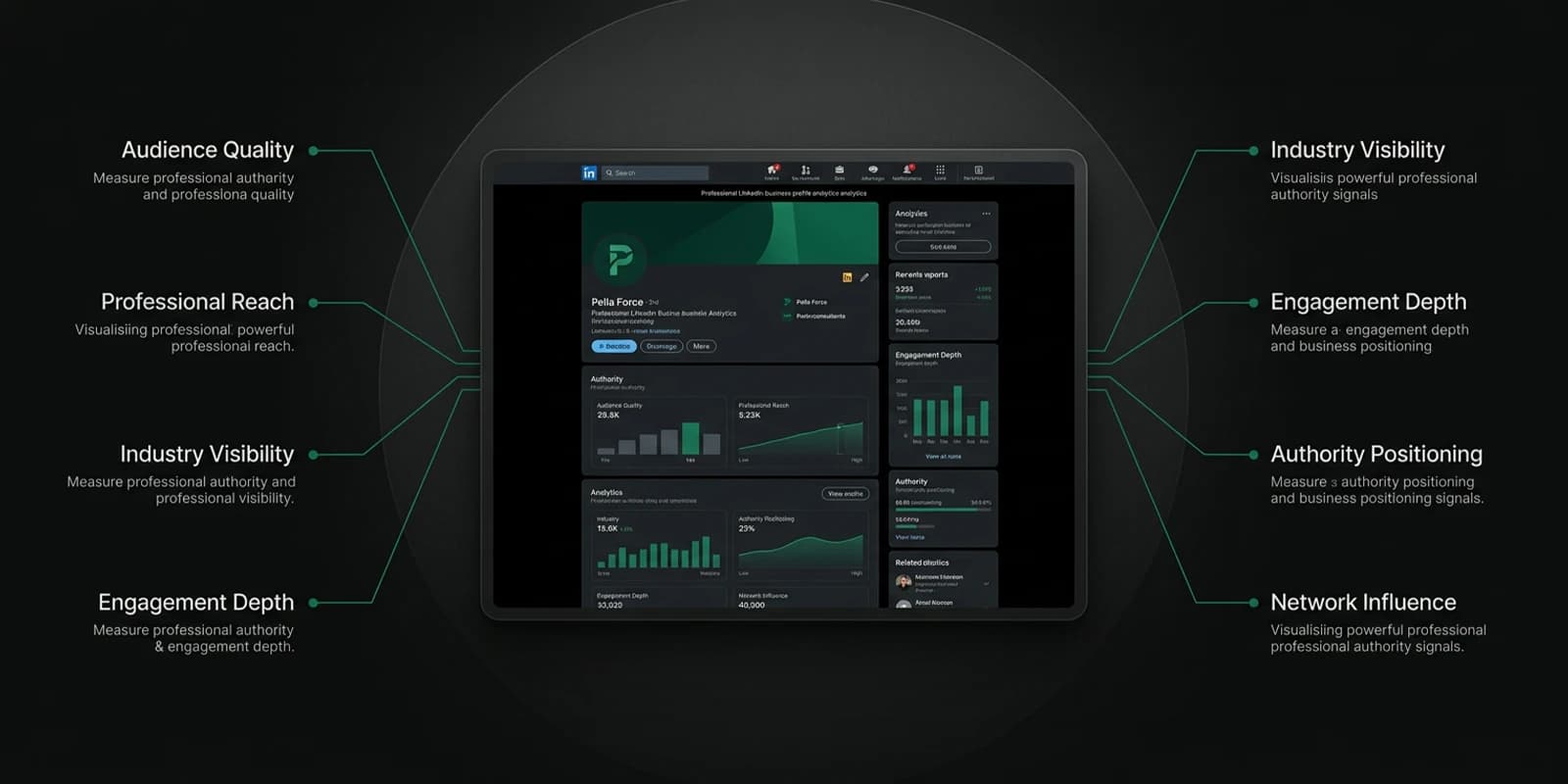
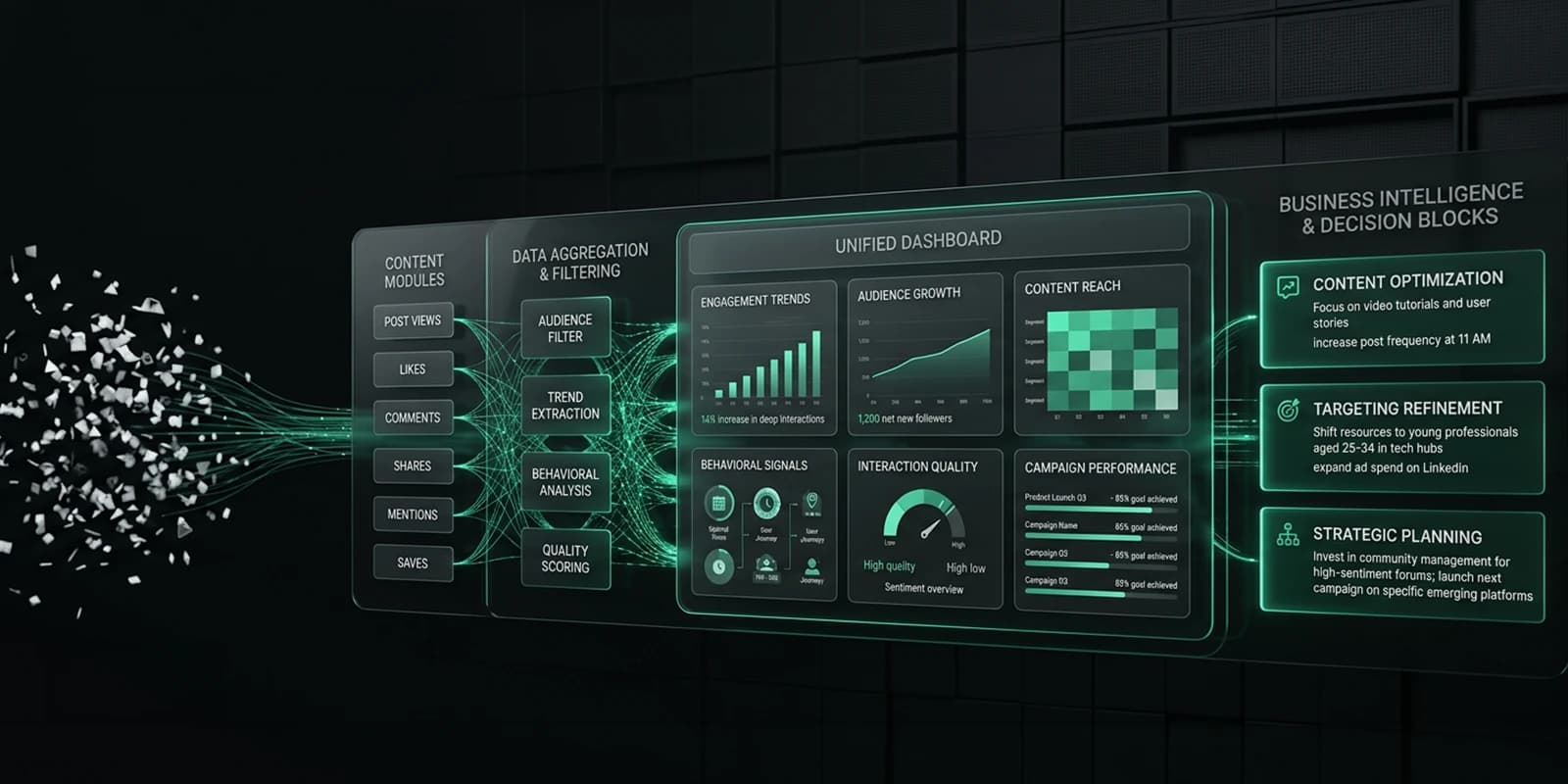
Linkedin business account metrics track how your professional content performs. They show who sees your posts, how people interact with your brand and how your network grows. To build true professional authority, you should look past simple vanity numbers.
Focus on metrics like employee advocacy, targeted engagement rates and detailed follower demographics. These key numbers show whether you are reaching the right B2B decision makers to grow your business.
Many business owners look at their LinkedIn dashboard and feel completely lost. The platform gives us a lot of data however data without meaning is useless. When you want to build strong professional authority and win more B2B clients, you should understand your LinkedIn analytics explained business account metrics at Pella Force.
In this blog, you will know what your business account analytics mean. You will learn the hidden truth behind impressions, how to calculate true engagement and which numbers matter for your weekly reports.
Post Impressions vs Reach on LinkedIn
These two metrics tell very different stories about how your content moves across the platform.
What are Impressions?
An impression is counted every time your post appears on someone's screen. When one user scrolls past your post three times in one day, that counts as three impressions. High impressions mean your content is popping up often however there is no meaning like unique people are seeing it.
What is Reach?
Reach **** tells you the exact number of unique users who saw your post. When that same user scrolls past your post three times, your reach is still one.
This difference is vital for your strategy. When your impressions are high and your reach is low, your content is being shown to the same small group of people over and over again. In the UAE market and other highly competitive global business hubs, you want a healthy balance.
Engagement Rate on LinkedIn: The Formula and Real Benchmarks
Engagement rate is the ultimate metric for quality in LinkedIn authority analysis. It tells you whether people actually care about what you say.
The LinkedIn Engagement Formula
LinkedIn calculates this number by adding your clicks, likes, comments, shares and follows, then dividing that total by your post impressions.
LinkedIn vs. Instagram Engagement
Stop comparing your LinkedIn data to your Instagram data. They are completely different worlds. Instagram depends highly on fast visual likes. However, LinkedIn needs professional interaction. A user commenting on LinkedIn is putting their professional reputation on the line.
What Good Looks Like by Industry?
Good engagement rates change depending on your field. Here is what we see across major industries globally and in local markets like the UAE:
Industry Sector
Average Engagement Rate
Top Performing Goal
Technology & Software (SaaS)
1.5% to 2.5%
4.0%+
Professional & Legal Services
2.0% to 3.2%
5.0%+
Corporate Finance & Banking
1.2% to 2.0%
3.5%+
Healthcare & Medical Fields
1.8% to 2.8%
4.2%+
Manufacturing & Logistics
1.0% to 1.8%
3.0%+
Profile Views and Search Appearances
Your profile views and search appearances in our LinkedIn authority analysis tell you how discoverable your business or personal brand is. They show whether your inbound marketing is working.
Profile Views
This metric shows the number of people who clicked directly onto your profile page. When this number goes up, it means your posts or comments are interesting enough to make people want to learn more about you. They are looking at your bio, your services and your website links.
Search Appearances
This metric updates once a week. It tells you how many times your profile showed up in LinkedIn search results. LinkedIn also shows you the top job titles of the people searching for you and the keywords they used. When you want to catch the eye of managing directors and your top searchers are interns, you know you need to adjust your content keywords.
Follower Demographics Analysis for B2B Assessment
We always tell our clients that the total number of followers you have is simply a vanity metric. There is no meaning in having 50,000 followers when none of them can buy from you. You need to dive into follower demographics.
LinkedIn breaks your audience down by three crucial B2B pillars:
Seniority: Are you attracting entry level employees or are you reaching Directors, VPs and C-suite executives?
Industry: Does your audience work in the specific sectors you sell to like tech, real estate or medical care?
Function: Are you reaching the right decision makers like heads of procurement, sales or operations?
Get our LinkedIn authority analysis service to review this demographic data at least once a month. When your target audience fails to match your current follower data, your content strategy is off-track.
Connection Growth vs Follower Growth
There is a huge unique difference between connections and followers on LinkedIn. Understanding this assists you build a better corporate network.
Connections are Two-Way Streets
A connection means both parties agree to link up. You see their posts and they see yours. This is highly personal and limited to 30,000 people maximum per profile.
Followers are One-Way Streams
Followers can see your public updates in their feed and you fail to see theirs. There is no limit to how many followers you can have.
When we look at LinkedIn analytics explained business account metrics, we want to see both growing. Fast connection growth means your team is actively networking. Fast follower growth means your content is spreading organically on a global scale as people want your insights without the need of a direct relationship.
Article and Document Post Performance
According to us, long form content is the best way to prove you know your industry.
Document Posts (PDF Carousels)
When you upload a PDF slide deck, LinkedIn turns it into a swipeable carousel. The algorithm loves these. Your metrics will show "clicks" every time someone moves to the next slide. High document clicks mean your audience is deeply engaged with your educational material.
LinkedIn Articles and Newsletters
Articles have a long shelf life rather than getting fast views. They show up on search engines outside of LinkedIn. Look closely at the "views" and "read time" metrics for articles. When readers spend several minutes on your newsletter, you are successfully building a huge executive authority in social media audit.
LinkedIn Company Page Analytics vs Personal Profile Analytics
To win on LinkedIn, you can hire our LinkedIn authority analysis service**** to understand the split between your corporate page and your personal executive profiles.
Company Page Analytics
Your company page shows macro-level brand data. It tracks unique visitor traffic, tab clicks (like your "Jobs" or "About" tabs) and employee advocacy numbers. It tells you whether your business looks like a reliable and stable corporate entity.
Personal Profile Analytics
People buy from people rather than logos. Personal executive profiles almost always get higher reach and engagement than company pages. Personal analytics focus highly on content creator metrics, profile views and search appearances.
Step by Step Guide: How to Run a Monthly LinkedIn Metrics Audit?
You can follow our easy steps of LinkedIn authority analysis at the end of every month to track your professional growth.
Export Your Data: Go to your LinkedIn business page analytics dashboard. Click the "Export" button in the top right corner to download your content data as an Excel file.
Calculate Average Engagement Rate: Add up your total engagements for the month, divide by total impressions and multiply by 100 to find your monthly baseline.
Identify Top Content Pillars: Sort your spreadsheet by impressions and then by engagements. Note down the top three posts that performed best. Look for patterns like were they videos, text stories or PDF guides?
Audit Follower Quality: Open your follower demographics tab. Check whether the top three listed industries and seniorities match your perfect customer profile.
Adjust Your Content Plan: When your engagement falls below your industry benchmark, plan to write shorter and more direct posts with clearer takeaways for the next month.
Conclusion
Tracking your LinkedIn analytics explained business account metrics is the only reliable way to grow your professional footprint online. When you want expert support for building a data backed content plan that converts impressions into actual revenue, we are always here for you. Contact Pella Force Content right now to get the best audit services.
FAQs
What is the difference between post impressions vs reach on LinkedIn authority analysis?
Impressions count how many times your post pops up on a user's screen. On the other hand, Reach counts the unique number of individual people who saw that specific post.
How do you calculate engagement rate on LinkedIn business accounts?
The formula adds up your likes, comments, shares, clicks and new followers.
Divide this sum by your total post impressions.
Multiply by 100 to get your percentage which changes depending on your B2B industry.
What do profile views and search appearances reveal about B2B discoverability?
Profile views show how many people clicked to check out your page.
Search appearances update weekly to show how often you pop up in search results.
Why is follower demographics analysis critical for LinkedIn business accounts?
Total numbers are simply for show unless you know who is following you. Demographics in our LinkedIn authority analysis service divide your audience by job title, industry and rank. This data ensures you are reaching real decision-makers
What is the strategic difference between connection growth vs follower growth?
Connections are mutual two-way friendships capped at 30,000 people and followers are a one-way street with no limits which lets anyone see your updates.
How do articles and document post performance metrics build professional authority?
Document posts show you how many people clicked through your PDF slides.
Articles track long-term views and show up on search engines like Google.
High read times prove that people trust your advice to solve big troubles.
How do LinkedIn company page analytics differ from personal profile analytics?
Company pages track overall brand health, visitor traffic, and website clicks. Personal profiles focus on individual networking reach and personal search stats. Smart setups use personal pages for chat and company pages to close deals.
Which 5 LinkedIn metrics should B2B business owners review weekly?
Engagement rate shows whether your weekly posts are still interesting.
Profile views track quick traffic jumps from your recent activity.
Search appearances verify whether your profile uses the right keywords.
Connection requests show how fast real professionals are adding you.
Document clicks monitor how well your educational PDFs are doing.
Which LinkedIn business account metrics should be audited monthly?
Demographic trends confirm you are consistently winning over corporate leaders.
Unique reach measures your broad brand growth in new areas.
Employee sharing checks how well your team assists spread company news.
Button clicks show how much traffic LinkedIn sends to your website.
Net follower growth marks your long term authority and overall brand health.
What is a good engagement rate benchmark for LinkedIn business accounts?
Average rates for business pages range between 1.5% and 3.0%. Top brands looking for fast growth should aim for 4.0% or higher.
What are LinkedIn analytics and why should I track them?
LinkedIn analytics measure content performance, audience engagement, and overall strategy on the platform.
Tracking helps B2B marketers optimize efforts, prove business impact, and understand audience behavior.
Key benefits include improved engagement, employee advocacy tracking, and competitive benchmarking.
Use analytics to allocate resources effectively and maximize ROI.
Pella Force offers comprehensive LinkedIn audit services to help you interpret and act on these metrics.
What is the difference between impressions and unique impressions on LinkedIn?
Impressions count total times your content is displayed, including repeat views by the same user.
Unique impressions count individual LinkedIn members who saw your content once.
Unique impressions typically represent 60-80% of total impressions.
Unique impressions give a more accurate picture of actual audience reach.
Pella Force provides detailed LinkedIn analytics audits to help you distinguish and optimize for both metrics.
What does engagement rate mean and what's considered good on LinkedIn?
Engagement rate is the percentage of people who interacted (likes, comments, shares) versus total impressions.
Comments: Shows conversation starters and deeper engagement.
Shares: Highest value engagement, amplifies reach to new networks.
Post clicks: Indicates interest in content details or calls-to-action.
Pella Force offers engagement metric analysis to prioritize high-value interactions for your business.
How can I use LinkedIn analytics to track ROI and business impact?
Track website clicks using UTM parameters to connect social efforts to traffic.
Monitor lead generation from LinkedIn content and campaigns.
Analyze which content drives valuable actions beyond just likes.
Measure sales conversations originating from LinkedIn activities.
Pella Force provides comprehensive LinkedIn attribution audits to quantify your ROI effectively.
What LinkedIn metrics correlate with revenue and business growth?
Inbound DM quality: Measure qualification rate and response-to-meeting conversion.
Engagement-to-conversation rate: Track engagements turning into real conversations.
Profile-to-pipeline velocity: Time from first profile view to meeting booked.
Self-reported attribution: "How did you hear about us?" on discovery calls.
Pella Force specializes in revenue-focused LinkedIn analytics to identify high-impact metrics for your business.
How Pella Force Helps You
Pella Force (https://pellaforce.com/) provides comprehensive LinkedIn analytics audit services to help you:
Interpret complex metrics with clear, actionable insights tailored to your business goals.
Benchmark your performance against industry standards and competitors.
Optimize content strategy based on engagement patterns and audience behavior.
Track ROI effectively using advanced attribution and conversion tracking methods.
Identify high-impact opportunities to improve professional growth through LinkedIn.
Our services include detailed LinkedIn audit reports, strategic content recommendations, and ongoing performance monitoring to ensure you maximize your LinkedIn investment.