Brands Use Audience Behaviour Data to Power Brand Decision-Making | Pella Force
Audience Behaviour Data: How Brands Use It to Craft Smarter Marketing Strategies
Posted 2/26/2026
10 min read
A
By Atul Lohar
How Brands Use Audience Behaviour Data to Drive Smarter Marketing Decisions
Audience behaviour data captures how consumers interact with a brand across digital channels and physical retail points. From browsing and looking for products to checking out and purchasing, every interaction weaves a story. This consumer behaviour data is a powerful resource. It guides to track the details of customer engagement, factors that attract and convert. These data lead to actionable insights and ultimately make the brand take informed decisions.
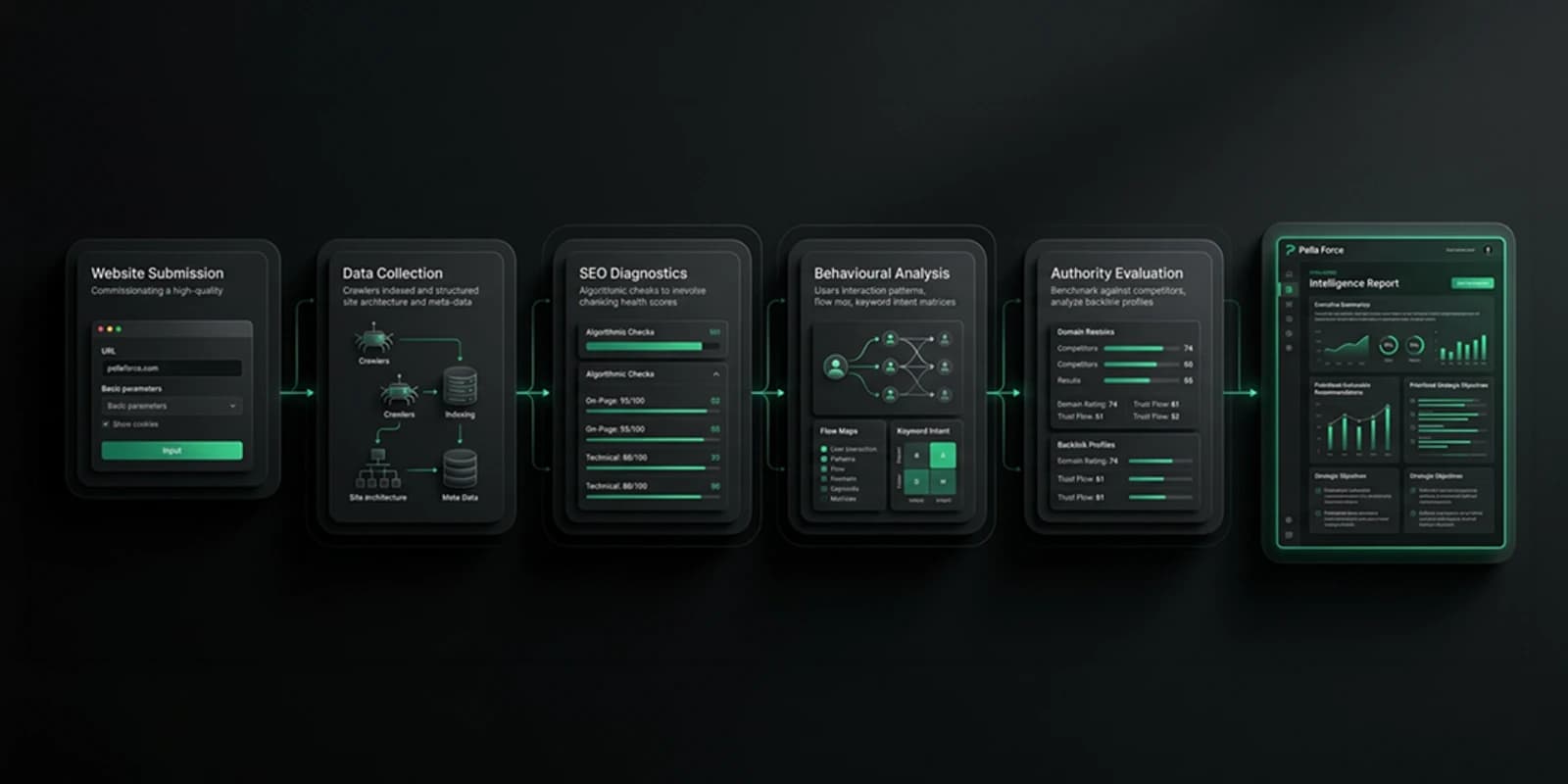
With the website report, published by Pella Force- a specialised digital analysis tool, brands turn raw data into actionable results. It supports brands in refining messaging, and optimising user experiences. This results in better marketing solutions, deeper connections with the target group, and informed decisions that augment growth. Let’s explore how audience behaviour data empowers brands to move from assumptions to precision and transform insights into impact.
Scope and Extent of Audience Behaviour Data
Audience behaviour data is real-time information that tracks how users interact with a brand. Digital analytical tools such as Pella Force access and analyse data retrieved from digital platforms. We encompass website clicks, email engagement, and purchase history to derive data-driven insights. This data focuses on user preferences, intent, and audience engagement levels. This guides all the brands to personalise marketing strategies and solutions and boost ROI.
The data guides brands to tailor marketing and promotional messages and content to specific user interests.
Our reports find out the points where users drop off in the sales funnel.
We also empower brands to conduct precise segmentation of audiences for advertising and promotional actions.
Audience data makes brands develop high-quality content. Personalised ads, tailored to your target groups’ and interests, and to increase the efficiency of your campaigns and ROI.
Our behavioural report also assists businesses to differentiate their frequent shoppers from regular users and discover more potential customers with this unique proposition.
We also make brands aware of the audience profiles. Our analytical expertise can discover and keep aside bots and non-human traffic. This is done by monitoring visitors’ browser history or the time spent on the website. Identified bots are eliminated automatically, helping brands avoid wasting their campaign budget on bot traffic.
Key Components of Audience Behaviour Data
Website/App Interactions: Our tool assists in tracking page views, time spent, scroll depth, search queries and form submissions.
Engagement Metrics: We have specialised skills to analyse email open rates, social media interactions and click-through rates.
Purchase Behaviour: Monitoring cart abandonment, purchase frequency, and product preferences are some of our strongest fortes.
Intent Data: Our website audit report also finds out indications that a prospect is actively researching, such as reading reviews or visiting pricing pages.
Methods to Track Audience Behaviour Data
In a world run by data, understanding the nitty gritties of audience behaviour is essential. By tracking consumer actions across all social media channels, brands gain the clarity needed to craft engaging user experiences.
Website Analytics- Our website analytics reports measure page views, traffic sources, session duration, user flow, and bounce rates.
Behavioural Analytics Tools: We use event-based tracking to analyse specific interactions, such as button clicks, product journeys and feature usage.
Heatmaps and Session Replays: We deliver visual, colour-coded data of users’ clicks, taps, and scrolls, along with video-like replays of user interactions.
CRM and Marketing Automation: Our data guides brands to track direct interactions, email engagement, customer support inquiries and form submissions.
Social Media Analytics: With our social media reports, brands gather data on engagement, shares, and audience sentiments on social media platforms such as LinkedIn, Facebook, and Instagram.On-Site Surveys/Feedback: We make brands collect qualitative data directly from users to comprehend their intent and opinions on specific pages of the brand websites.
Brands Use Audience Behaviour Data to Drive Decision-Making
Brands that succeed listen and empathise. They pay close attention to the aspirations of their audiences, behaviour patterns, and influencing factors in their decisions. Pella Force, a leading name in digital analytics, brings clarity to this process by transforming complex data into structured, actionable insights. With Pella Force, businesses are empowered to make smarter, faster, and more impactful decisions that drive meaningful results. Take a glance to know how brands use audience behaviour data to drive impactful and measurable decisions.
Personalised Marketing and Engagement
1. Using behavioural data to deliver targeted, relevant content and promotional content across email, social media platforms, and websites assists in decision making process. These actions are based on individual user interests.
2. Analysing past behaviours to forecast future trends is what we deliver as predictive analytics. We guide businesses to spotlight customers to send promotional content for real-time conversion.
3. Brands can identify which features, products, or site pages lead to the highest engagement and conversions. It empowers brands to refine their products and enhance customer experience.
4. We guide brands to track the audience segments and channels that produce the best ROI. Pella Force analytical tool enables marketers to shift resources from underperforming areas to high-value ones.
5. Businesses analyse user interaction data to generate highly specific, relevant ads that resonate with potential customers, improving conversion rates.
Wrap Up
Audience behaviour data is a decision-making powerhouse, and the digital analytical report generated by Pella Force supports brands to enhance their position in the digital space. We deliver a clear understanding of how consumers interact, engage, and convert across digital platforms, powered by data-driven insights. These insights enable brands to take up smarter strategies, personalised experiences, and more effective marketing investments.
When used wisely, our audience behaviour data supports brands to stay active, anticipate requirements, and make decisions to drive growth and build lasting customer relationships. If you are looking for a end to end digital analysis with foolproof audience behaviour data, connect with the Pella Force tool for effective and actionable outcomes.
FAQs
1. How do brands extract audience behaviour data?
Digital analytical tools like Pella Force guide brands to collect this data through website analytics, social media insights, CRM systems, mobile apps, in-store tracking, and customer feedback tools.
2. Can audience behaviour data improve customer experience?
Yes, our audience behaviour data allows brands to identify and streamline customer journeys, discover challenges and deliver more relevant and effective interactions across digital channels.
3. Is audience behaviour data useful for decision-making beyond marketing?
Absolutely. It supports product development, pricing strategies, inventory planning, and customer retention initiatives.
4. How does audience behaviour data improve marketing strategies?
By analysing behaviour patterns, brands can personalise messaging, optimise campaigns, target the right audiences, and allocate budgets more effectively.
5. How can brands use "lost buyer" data to create a win-back campaign?
We support brands to analyse the behaviour of customers who stopped buying and left mid-way. If the audience has left right after a competitor lowered prices, the brand’s marketing and promotion team can produce a campaign focused on superior quality or a "we miss you" incentive. This will guide the brands to deliver marketing excellence and attract organic traffic.
6: What is audience behaviour data and why does it matter in marketing?
Audience behaviour data refers to the information collected about how users interact with digital touchpoints — websites, apps, ads, emails, and social platforms. It matters because:
It reveals what users click, scroll, watch, and buy
It maps the customer journey from awareness to conversion
Helps brands predict future actions using past patterns
Enables smarter budget allocation by focusing on high-performing channels
Reduces guesswork and drives data-informed campaign decisions
7: How do brands collect audience behaviour data for marketing?
Brands collect audience behaviour data through multiple methods:
Website analytics tools like Google Analytics 4 (GA4) and heatmaps
CRM platforms tracking purchase history and email engagement
Social media insights from Meta, LinkedIn, and YouTube
Pixel tracking and cookies to monitor cross-site behaviour
First-party surveys, chatbots, and on-site search queries
8: How do brands use audience behaviour data to build smarter marketing strategies?
Brands use audience behaviour data to create targeted, high-converting strategies by:
Segmenting audiences by behaviour, demographics, and intent signals
Crafting personalised content and messaging for each journey stage
Optimising ad targeting based on real browsing and purchase patterns
Identifying high-value micro-segments for premium campaigns
Building predictive models to anticipate customer needs before they arise
9: What types of audience behaviour data do marketers typically track?
Marketers track several categories of audience behaviour data:
Clickstream data — pages visited, time-on-page, navigation paths
Purchase & transactional behaviour — buying frequency and cart abandonment
Engagement signals — scroll depth, video watch time, form fills
Search intent data — queries, keywords, and SERP interactions
Social listening signals — likes, shares, comments, and brand mentions
10: How does AI improve the analysis of audience behaviour data for marketers?
AI transforms how brands interpret audience behaviour data by:
Processing massive datasets in real-time that humans can't manually review
Identifying hidden patterns in browsing, purchase, and engagement signals
Running predictive analytics to forecast customer actions
Enabling dynamic personalisation at scale across channels
Powering AI-driven segmentation that auto-adjusts based on live behaviour
11: How can audience behaviour data be used to improve content personalisation?
Audience behaviour data powers hyper-personalised content experiences by:
Delivering dynamic page content tailored to user segments and stages
Automating personalised email sequences based on past interactions
Recommending relevant blog posts, products, or videos like Netflix and Amazon
Adjusting CTAs and landing pages for different audience segments
Boosting conversion rates by matching content to buyer intent signalskantar+1
12: What are the best tools for analysing audience behaviour data in digital marketing?
Leading tools for audience behaviour data analysis include:
Google Analytics 4 (GA4) — behavioural flow, event tracking, funnels
Hotjar / Microsoft Clarity — heatmaps, session recordings, scroll maps
SEMrush & Ahrefs — search behaviour and keyword intent analysis
Meta Ads Manager — interest and behavioural audience profiling
HubSpot CRM — lifecycle stage tracking and engagement scoring
13: How does analysing audience behaviour data help reduce wasted marketing spend?
Audience behaviour data helps brands eliminate poor-performing investments by:
Identifying low-engagement audience segments consuming budget without results
Revealing the exact touchpoints that drive conversions vs. drop-offs
Enabling lookalike audience modelling to target high-probability converters
Optimising campaign timing based on when audiences are most active
Shifting spend toward channels with proven behavioural engagementbusiness.
14: What is the difference between first-party and third-party audience behaviour data?
Understanding data types is critical for compliant, effective marketing:
First-party data — collected directly from your own website, app, CRM, or surveys (most reliable and privacy-safe)
Third-party data — purchased from external aggregators, less accurate, and increasingly restricted under GDPR/privacy laws
Zero-party data — voluntarily shared by users via forms or quizzes
First-party behaviour data is now the gold standard for 2026 strategy
15: How should brands use audience behaviour data ethically and stay GDPR compliant?
Ethical use of audience behaviour data involves:
Gaining explicit user consent via cookie banners and privacy notices
Following GDPR, CCPA, and regional data protection regulations
Using data anonymisation and aggregation to protect individual identities
Adopting a first-party data strategy to reduce reliance on third-party tracking
Being transparent about what data is collected and how it is used