What Is Audience Behaviour Data & How Do Brands Use It to Decide? | Pella Force
Audience Behaviour Data: What It Is, Why It Matters, How Brands Use It Every Day and Turn Insights Into Winning Decisions
Posted 2/4/2026
11 min read
A
By Atul Lohar
Audience Behaviour Data in Brand Decision-Making: What It Is and How to Use It - Complete Framework
Ever notice why people like something and end up buying something else? It's a deliberate choice. Typically, consumers have a pattern, and that's what you can learn from audience behavior data.
This era is quite competitive, and simply having access to a wealth of data often falls short. You also need to direct data into meaningful analysis. The analysis reports are what eventually support marketing and branding in a strategic manner. This is where Pella Force comes into action. We can be your one-stop solution to channeling the pool of data into useful reports and summaries. Read on to understand how Pella Force works in benefitting your business.
What is Behavioural Targeting?
Brands often strive to bring the most personalized offerings to the target consumers. For this, it's quintessential to understand consumer behavior. This is when your business needs to decipher consumer behavior data.
Simply put, consumer behavior data reveal how your consumers think, choose, and act while buying products/services. It shows a pattern of their preferences and habits. Using such data, companies can target customers in a more personalized manner. This is known as behavioral targeting. Primarily, this is a digital marketing strategy that uses a data-driven approach.
Purpose & Benefit of Data-Driven Decisions
There are several benefits of data-driven behavioral targeting. It drives the decision-making of a brand and also supports planning strategic marketing. Here are some striking benefits of data-driven decisions and targeted marketing:
Through behavioral marketing, brands can communicate their messages to people who are really interested in their products or services. Aligning content with the browsing behavior, preferences, and intent, marketing becomes more meaningful. Users also feel more connected since they receive personalized offerings.
Optimized Campaign Performances
Marketing campaigns become a lot more efficient and focused when you target specific audience segments. Brands can efficiently allocate resources to places that can deliver the highest impact. This way, brands can plan optimized campaigns and also reduce wasteful spending. Metrics like conversions, click-through rates, etc., also improve with targeted campaigns.
Enhanced Customer Relations
One of the ways to grow trust between the brand and the consumer is through continuous personalization. Consumers feel more connected to brands that offer them personalized offerings without forced selling. It motivates them to keep returning to the brand, take more actions, and build a long-term customer relationship.
Improved Decision-Making
Marketers get to know customers better through behavioral data, which unveils the preferences, journeys, and pain points of customers. Such insights can make decisions based on evidence, adjust strategies, and regularly upgrade campaigns, content, and digital experiences. In short, it directly improves the decision-making of the brand.
Enhanced Audience Base
Behavioral pattern analysis is a very good tool for identifying new audience segments that have the same interests or intent. This is what makes it possible for the brands to expose their products to potential customers who are outside their current customer base. Thus, it increases visibility, engagement, and growth opportunities.
How Does Pella Force Work?
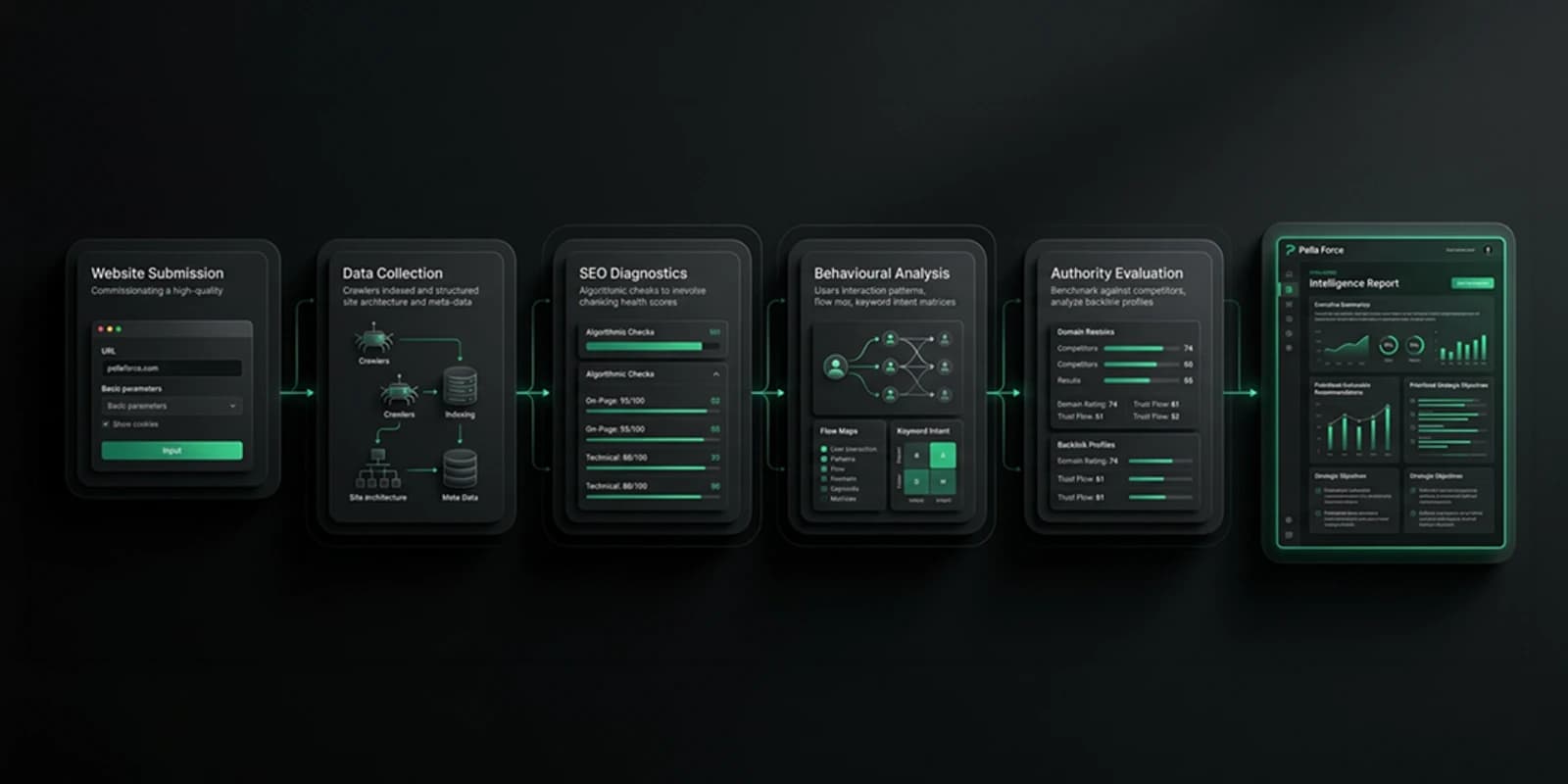
Pella Force utilizes cutting-edge analytics technology to interpret consumer behavior data. We then synthesize it into reports and practical summaries. Our reports assist brands in informed decision-making.
At Pella Force, we observe, understand, and turn raw consumer data into meaningful reports. Consumers can be divided into various segments that have shared interests and preferences. Based on these insights, brands can plan targeted offerings to each segment.
Key working process of Pella Force:
We collect consumer behavior data across multiple online channels
We identify patterns, trends, and preferences of consumers, both existing and new ones
We segment audiences based on shared behavior patterns and preferences
We convert data into easy-to-understand reports
Finally, we deliver clear, decision-ready summaries to our clients.
End Note
Pella Force assists companies gain real understanding of consumer preferences. We do so by transforming complicated data on consumer behavior into simple and clear insights that can be acted upon. It guides brands to discover the consumer's 'why' through structured analysis and the careful presentation of the findings. Thus, providing a better base for informed decision-making.
Our reports and summaries provide brands with more strategic decisions. Such a method facilitates the brands' capability of reacting with confidence to the changing market dynamics. On the other hand, they still stay connected with the true needs of consumers. Upscale your brand's marketing and decision-making with us. Connect with us to get on-point summaries and reports on audience behavior data.
Frequently Asked Questions
Is Pella Force suitable for small businesses?
Yes. No matter the size of your business, targeted marketing can have a huge impact on the overall returns of your company. By leveraging these services, it becomes easier for even small businesses to plan their budget, marketing, and customer relationships with more focus.
How does Pella Force collect data?
In order to collect consumer behavior data, Pella Force uses various digital touchpoints of users, such as websites, apps, social media, and CRM systems. This allows them to have a comprehensive understanding of the behaviors and preferences of their users.
What kind of insights does Pella Force offer?
Pella Force is capable of providing insights about the audience including their preferences, the pattern of their purchases, level of engagement, and behavior trends. The insights can be used as a guide for marketing, product development, and strategic planning decisions.
How can brands use these insights?
Our reports and summaries can be used by brands to optimize their campaigns, personalize their messages, and enhance the overall user experience. They can also use these insights to improve their products and make data-driven decisions that reflect consumer behavior and anticipate market trends.
What industries can benefit from Pella Force?
Any industry whose success hinges on a deep understanding of consumer behavior. This includes retail, e-commerce, healthcare, technology, finance, etc. It would therefore allow brands to be more targeted in their marketing efforts.
How does Pella Force improve decision-making?
Pella Force summarizes raw data and presents it in a clear and understandable manner. Brands can use these insights to make informed decisions regarding branding and customer relations. Thus, it directly improves the engagement and outcome of a brand
What is audience behaviour data and why is it important for brand decision-making?
Audience behaviour data refers to the collected insights on how users interact with a brand's website, content, ads, and products — including click patterns, session duration, purchase history, and scroll depth.
It helps brands identify what content, channels, and messages drive engagement
Enables data-driven decision-making instead of guesswork or assumption
Supports accurate customer segmentation and personalization at scale
Reduces marketing spend waste by targeting high-intent audiences
Brands like Amazon, Apple, and Tesla use audience intelligence to make every major product and campaign decision
Key Insight: Audience behaviour data transforms raw user signals into actionable brand strategy, giving decision-makers a 360° view of customer intent.
How can brands collect audience behaviour data effectively?
Brands collect audience behaviour data through a combination of first-party, second-party, and third-party data sources across digital and offline touchpoints.
Website analytics: Google Analytics 4 (GA4), heatmaps (Hotjar), session recordings
CRM data: Purchase history, email engagement, customer lifetime value
Social media analytics: Platform insights from Meta, LinkedIn, YouTube
Behavioural surveys & feedback forms: Direct user intent signals
Search behaviour data: Google Search Console queries, keyword intent mapping
Ad platform data: Click-through rates, conversion paths, audience overlap reports
Combining these sources into a Customer Data Platform (CDP) gives brands a unified behavioural profile for smarter decisions.
How do brands use audience behaviour data to improve marketing campaigns?
Brands leverage audience behaviour data to optimise campaign targeting, messaging, and creative assets — moving from generic outreach to hyper-personalised marketing.
Identify high-converting audience segments based on past behaviour
Personalise email sequences, ad copy, and landing pages for different audience clusters
Use retargeting signals to re-engage users who showed purchase intent
Analyse content consumption patterns to determine which topics drive the most qualified traffic
A/B test campaigns using behavioural cohorts rather than demographic filters alone
Result: Brands using real-time audience behaviour insights report significantly lower Cost Per Acquisition (CPA) and higher Return on Ad Spend (ROAS).
What role does audience behaviour data play in product development decisions?
Audience behaviour data directly informs product innovation, feature prioritisation, and roadmap planning by surfacing unmet customer needs before they become market gaps.
Track search query patterns to identify product features users are looking for
Analyse support ticket and review data to find friction points in existing products
Monitor competitor audience behaviour to spot demand trends early
Use content engagement data (blogs, videos, FAQs) to validate product concepts
Kellogg's used Gen Z audience insights to identify demand for new beverage categories
Brands that build products based on behavioural evidence rather than assumptions consistently outperform market benchmarks.
How does audience behaviour data help brands personalise the customer experience?
Personalisation powered by audience behaviour data enables brands to deliver the right message, to the right person, at the right moment — across every touchpoint in the customer journey.
Segment audiences into micro-clusters based on interests, purchase behaviour, and content preferences
Deliver dynamic website content that adapts based on user behaviour (e.g., returning vs. new visitors)
Trigger personalised email flows based on behavioural events (cart abandonment, page views, inactivity)
Create custom ad experiences aligned to audience journey stage (awareness, consideration, decision)
79% of marketing leaders are not yet using real-time audience insights — making this a major competitive advantage
What are the best tools for analysing audience behaviour data for brand strategy?
The most effective audience behaviour analytics tools give brands both quantitative data (what users do) and qualitative insights (why they do it).
Audiense / SparkToro: Deep audience psychographic and interest profilingsparktoro+1
Hotjar / Microsoft Clarity: Heatmaps, session recordings, rage-click analysis
HubSpot / Salesforce CRM: Behavioural lead scoring and customer journey mapping
Meta Ads Manager / Google Ads: Real-time campaign audience behaviour signals
Integrating these tools into a centralised analytics stack gives brand strategists a holistic picture of audience intent across the funnel.
How can brands use audience behaviour data to optimise content strategy?
Audience behaviour data reveals which content formats, topics, and distribution channels generate the most meaningful engagement — enabling brands to build authority and drive conversions.
Analyse pages with high dwell time and low bounce rates to identify resonant content themes
Use search query data from Google Search Console to align content with real user questions
Track scroll depth and click heatmaps to understand how users consume long-form content
Identify content gaps by comparing audience search behaviour with competitor coverage
Build topic clusters and pillar pages around the audience's most searched behaviour-related queries
Content decisions backed by behavioural data consistently outperform editorial intuition in generating organic traffic and qualified leads.
How does audience behaviour data support brand positioning and competitive strategy?
Understanding how your target audience behaves across competitor brands allows you to identify positioning gaps and craft differentiated value propositions.
Track which competitor content, products, and messaging your audience engages with most
Use audience overlap tools to identify shared segments and uncontested niches
Monitor social listening and sentiment data to understand emotional drivers behind brand preference
Analyse search intent shifts (navigational, informational, transactional) to time brand messaging correctly
Identify underserved audience segments that competitors are ignoring
Brands that consistently listen to audience behaviour signals can anticipate market shifts before competitors and reposition proactively.
What are the biggest challenges brands face when using audience behaviour data for decision-making?
Despite its power, using audience behaviour data effectively presents several operational, ethical, and technical challenges brands must proactively address.
Data silos: Behaviour data fragmented across multiple platforms without unified reporting
Privacy regulations: GDPR, CCPA, and cookie deprecation limiting third-party data access
Interpretation bias: Teams drawing incorrect conclusions from incomplete or misread data
Data overload: Too many metrics leading to "analysis paralysis" without actionable prioritisation
Attribution complexity: Multi-touch attribution across long customer journeys remains difficult to map accurately
The solution lies in building a first-party data strategy with clean data governance, clear KPIs, and cross-functional data literacy across marketing teams.
How can small and mid-size brands start using audience behaviour data without large budgets?
Small and mid-size brands can build a cost-effective audience behaviour data strategy using free and affordable tools that deliver enterprise-level insights at scale.
Start with Google Analytics 4 (free) — set up key events, conversion tracking, and audience reports
Use Google Search Console (free) to analyse search behaviour driving traffic to your site
Install Microsoft Clarity (free) for heatmaps and session recordings
Leverage SparkToro free tier for audience interest and behaviour profiling
Mine social media analytics natively (LinkedIn, Instagram Insights, YouTube Analytics)
Conduct monthly behavioural audits to identify patterns and make incremental strategy improvements
Consistent, structured use of free tools can generate the same strategic clarity that enterprise brands achieve with six-figure analytics budgets.