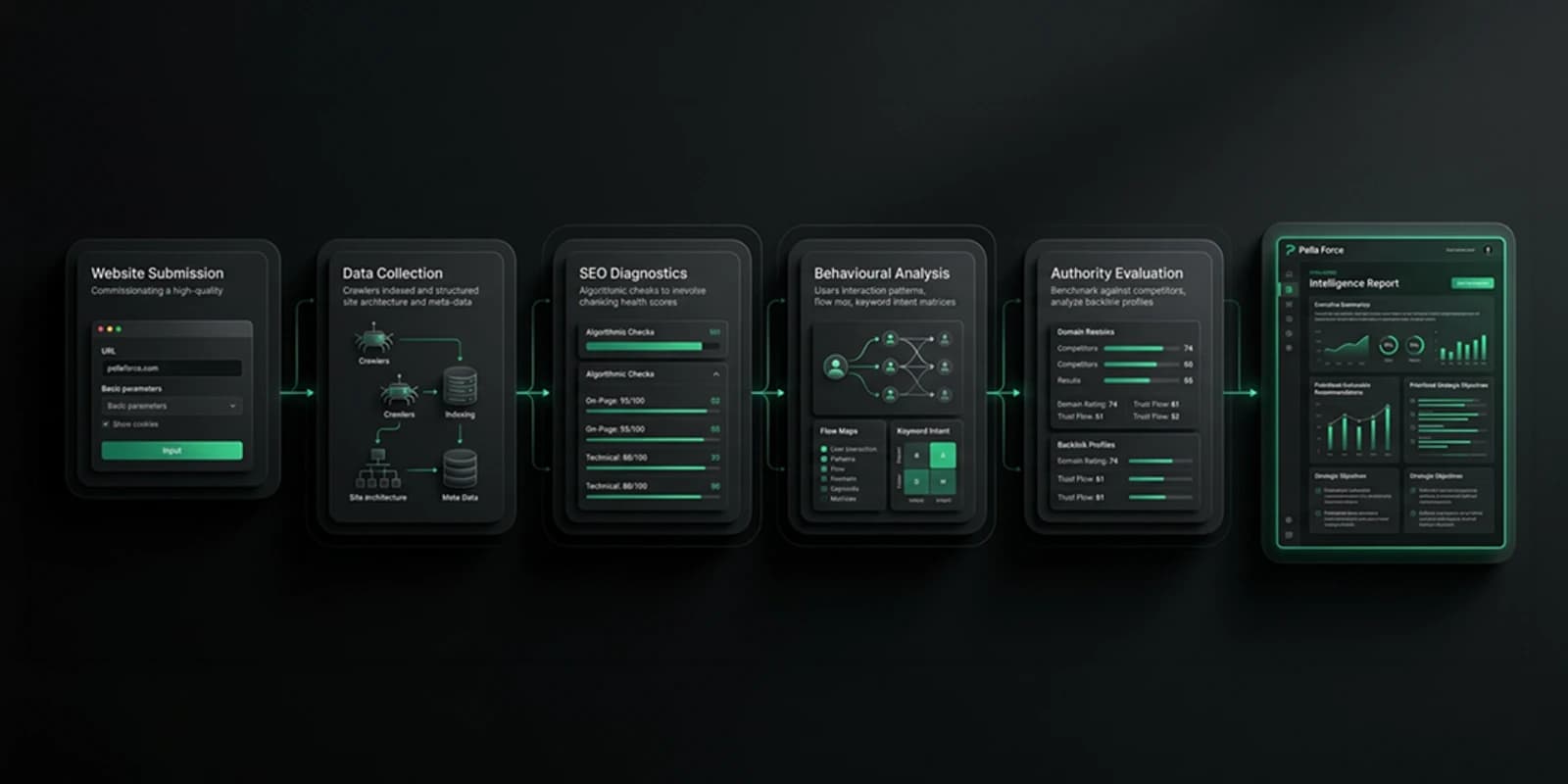
Best Digital Intelligence & Analytics Tools for Brands (2026 Guide) | Pella Force | Pella Force
Top Digital Intelligence & Analytics Tools Every Brand Should Know
Posted 2/9/2026
12 min read
A
By Atul Lohar
Best Digital Intelligence and Analytics Tools Every Brand Should Be Using in 2026
Understanding audiences, journeys, and decision-making patterns at a much deeper level is what digital growth is all about these days. In fact, data is everywhere, on various platforms, at different touchpoints, and through various interactions. However, the only thing that brings value to this data is when it gets converted into meaningful intelligence. Digital intelligence, together with analytics tools, allows brands to unravel the scattered pieces of information and convert them into structured insights. Further, these can be used for the strategy, positioning, and performance.
This guide is about the most important divisions of digital intelligence and analytics toolsthat every brand be familiar with. It is more about being aware of, understanding, and making smarter decisions rather than the execution that is the focus here.
What Digital Intelligence and Analytics Tools Actually Do
Digital intelligence tools get, organise, and interpret data from several sources. Analytics tools focus on performance, behaviour, and engagement at a deeper level. Hence, they provide a quintessential picture of the interaction of the audience with the brand across various digital environments.
Instead of merely concentrating on surface figures, modern tools assist in revealing much deeper layers such as motive, purpose, and comparative behaviour.
Web and Behaviour Analytics Tools
Web analytics tools have, and continue to be, a major part of digital intelligence. They allow tracking of a user's journey, how they come to a site, the path they take, and what parts of the site they interact with.
Key insights from these tools include:
Page-level engagement trends
Session paths and interaction flow
Audience segments and interests
Content consumption patterns
Behaviour analytics tools take a step further by providing visuals of scroll depth, interaction heatmaps, and decision points. This thus pushes brands to understand what attention is and what is facilitating the getting to know more part of the content.
Customer Journey and Experience Analytics Tools
Customer journey analytics tools attach the maps showing the stages that audiences go through in their interaction over time to different touchpoints. With these tools, a brand can see how each interaction that the customer has with the brand spans from discovery to engagement and the eventual decision to buy.
They assist brands in understanding:
Multi-touch journeys across devices
Drop-off points and momentum drivers
Experience consistency across platforms
Behavioural signals influencing decisions
When the journey is seen as one continuous experience rather than a series of disconnected actions, brands can clearly understand how users move through and engage with their solutions.
Social Listening and Audience Intelligence Tools
Social intelligence tools track mentions, discussions, and sentiment across social platforms, forums, and communities in order to expose the valuable insight that is hidden in the audience conversations.
Moreover, audience intelligence platforms group users according to their interests, preferences, and behavior patterns. Thus, providing a deeper understanding of people that goes beyond demographic characteristics only.
These tools reveal:
Topics audiences care about most
Emerging trends and language shifts
Brand perception and narrative themes
Competitive visibility and positioning
Audience intelligence platforms, on the other hand, segment users based on their interests, affinities, and behavior patterns. Thereby, providing a more in-depth understanding beyond demographics.
Search and Content Intelligence Tools
Search intelligence tools enable a brand to understand the performance of its content in various search settings. These tools review the content's visibility, the range of topics covered, and the relevance of the content.
They support insights such as:
Topic demand and interest patterns
Content performance across queries
Visibility trends over time
Competitive content landscapes
Content intelligence tools go further in assessing the content by analyzing different elements such as the organization, readability, and semantic coherence. Therefore, assisting content creators to produce content that is of high quality and also aligned with the ever-changing AI-driven search systems.
Competitive Intelligence and Market Analysis Tools
Competitive intelligence tools carefully follow the movement of the market, the presence of the brand, and the comparative positioning. These software programs enable the brand to comprehend how it ranks against other category players.
Insights include:
Share of attention across channels
Content coverage and differentiation
Market trends and emerging players
Messaging and positioning patterns
This awareness creates solutions for strategic lucidity and well-informed planning that is based on actual data.
Data Visualisation and Insight Platforms
Mere raw figures are rather powerless. Data visualisations are tools that translate complex data sets into visually appealing dashboards, charts, and stories.
These platforms assist teams:
Identify trends quickly
Communicate insights across stakeholders
Connect multiple data sources
Support confident decision-making
Intelligently designed and structured visual intelligence drastically enhances the level of understanding. Thus, marketing, product, and leadership teams can be better aligned.
Predictive and Advanced Analytics Tools
Advanced analytics platforms employ turnover prediction with the assistance of modeling and pattern identification. These tools look into the past data and also into the current data to find new opportunities and anticipate changes.
They support:
Trend forecasting and scenario planning
Behaviour pattern recognition
Demand and interest modelling
Strategic readiness and planning
Predictive analytics gives a competitive edge to the brands to know what is going to happen next. Thus, brands can react accordingly in the ever-changing digital market environments.
Choosing the Right Mix of Tools
Each company has an individual benefit in a customized intelligence stack that is consistent with its objectives, size, and development stage. An efficient choice means focusing on clarity rather than the number of options available.
A strong toolkit usually combines:
Behaviour and journey analytics
Search and content intelligence
Audience and market insights
Visual reporting and interpretation
The real power is at your fingertips when you link up the insights from the different tools rather than looking at them separately.
Turning Data Into Strategic Intelligence
Tools alone create information. Insight emerges through interpretation. Digital intelligence becomes powerful when data translates into understanding, direction, and confidence.
Brands that focus on behavioural patterns, audience intent, and contextual signals build strategies rooted in reality. This approach supports stronger alignment across content, positioning, and experience.
Conclusion
Digital intelligence and analytics tools ensure brands move beyond metrics and into meaningful understanding. From behaviour tracking to predictive insights, these platforms reveal how audiences engage, explore, and decide. Brands that invest in insight-led intelligence gain clarity, relevance, and long-term strategic strength in an increasingly data-driven digital landscape.
Frequently Asked Questions
What is the difference between digital intelligence and analytics tools?
Analytics tools measure performance and behaviour, while digital intelligence tools interpret data patterns to support strategic understanding.
Why are behaviour analytics tools important for brands?
They reveal how audiences interact, engage, and move across digital experiences, supporting deeper insight into decision patterns.
How do social intelligence tools assist brand strategy?
They track conversations, interests, and trends, offering clarity on audience perception and emerging themes.
What role do content intelligence tools play today?
They assist brands in understanding topic relevance, visibility, and alignment with evolving search and AI-driven discovery systems.
How can brands turn analytics data into actionable insight?
By connecting data across tools, focusing on patterns, and interpreting insights through a strategic lens aligned with business goals.
What are the top tools for digital intelligence and analytics every brand should know?
The top digital intelligence and analytics tools every brand should know in 2026 include:
Microsoft Power BI — drag-and-drop dashboards with 200+ data connectors and AI-powered insights
Google Analytics 4 (GA4) — essential for tracking website traffic, user behavior, and conversion funnels
Tableau — powerful data visualization and storytelling tool used by enterprise teams
SEMrush — all-in-one platform for SEO analytics, keyword research, and competitor tracking
Zoho Analytics — affordable, SMB-friendly BI with AI assistant "Zia" for natural language queries
Brandwatch / Sprout Social — social listening and audience intelligence platforms
PellaForce — independent digital intelligence reports covering SEO, social media, website analytics, and AI visibility for brands worldwide
What is digital intelligence, and why does every brand need it?
Digital intelligence is the process of collecting, analyzing, and acting on data from all digital channels — including websites, social media, search engines, and AI platforms — to guide brand strategy and growth.
Every brand needs it because:
It reveals where marketing budgets are underperforming
It tracks competitor gaps and keyword opportunities
It identifies customer behavior, engagement, and conversion patterns
It provides AI visibility signals — crucial as brands are now discovered through LLMs and AI Overviews
Without it, brands make guesses instead of data-backed strategic decisions
How do digital analytics tools help brands improve marketing ROI?
Digital analytics tools improve marketing ROI by showing exactly where revenue is gained or lost across all digital touch points.
Key ways these tools boost ROI:
Identify high-performing traffic channels and reallocate budget accordingly
Detect content gaps that reduce organic traffic and conversions
Track conversion funnels so brands fix leaks before they cost money
Measure social media engagement vs. actual business outcomes
Enable real-time course correction on campaigns, reducing wasted spend
What is the difference between business intelligence (BI) and digital intelligence?
Business intelligence (BI) and digital intelligence are related but serve different scopes:
Feature
Business
Intelligence (BI)
Digital
Intelligence
Focus
Internal company data (sales, finance, ops)
External digital channels (SEO, social, web)
Tools
Power BI, Tableau, Qlik
GA4, SEMrush, Brandwatch, PellaForce
Data Source
CRM, ERP, databases
Search engines, social media, AI platforms
Output
Operational dashboards
Brand visibility and digital performance reports
Users
C-suite, analysts
Marketing, SEO, content, brand teams
Which AI-powered analytics tools are best for brand intelligence in 2026?
The best AI-powered analytics tools for brand intelligence in 2026 are:
Power BI Copilot — Microsoft's AI copilot with predictive analytics and natural language queries
Tableau GPT — turns data into narrative-driven, story-based visual insights
IBM Watson Analytics — enterprise-grade AI for pattern recognition and predictive forecasting
Sisense — embedded analytics with AI anomaly detection and automatic metric alerts
ThoughtSpot — search-driven BI with AI-powered natural language analysis
Supaboard — no-code AI reporting and instant dashboards for startups and enterprises
PellaForce's AI Visibility & Authority Reports go a step further — analyzing how your brand appears in AI-driven search platforms like Google AI Overviews, Perplexity, and ChatGPT, ensuring contextual relevance and citation authority.
What digital intelligence tools are essential for SEO and search analytics?
For SEO and search analytics, the following digital intelligence tools are essential in 2026:
Google Search Console — monitors indexing, search performance, and technical health
SEMrush / Ahrefs — keyword research, backlink analysis, and competitive gap identification
Screaming Frog — technical SEO crawling for site structure and error detection
Google Analytics 4 (GA4) — behavioral and conversion data tied to organic search traffic
Surfer SEO / Clearscope — content optimization aligned with search intent and SERP data
How can small businesses use digital intelligence tools without a big budget?
Small businesses can leverage digital intelligence tools affordably by:
Starting with free tools — Google Analytics 4, Google Search Console, and Google Business Profile
Using Zoho Analytics — an affordable, SMB-friendly BI platform with AI assistant capabilities
Leveraging Metabase — open-source, embeddable analytics for small product teams
Running monthly SEO audits via free tiers of SEMrush or Ubersuggest
Investing in one-time professional digital intelligence reports instead of expensive subscriptions
PellaForce offers structured one-time digital intelligence reports — covering SEO, website analytics, social media, and keyword research — that deliver long-term strategic value without recurring SaaS costs.
What is an independent digital audit and why does a brand need one?
An independent digital audit is an objective, third-party assessment of a brand's complete digital presence — including SEO, website performance, social media, and AI visibility — conducted without internal bias.
Brands need it because:
Internal teams may overlook systemic issues due to familiarity bias
It provides an unbiased view of what's actually working vs. what's being reported as working
It identifies hidden budget leaks in ads, SEO, and content
It benchmarks performance against real competitors in the market
It delivers clear, structured recommendations ready for immediate execution
PellaForce's DigiGuard service functions as an independent digital guardian — examining digital operations and presenting objective insights beyond the typical "everything is fine" agency reports.
How do brands track AI visibility and digital authority in 2026?
In 2026, tracking AI visibility and digital authority requires a new layer of analytics beyond traditional SEO:
Monitor brand mentions and citations in AI platforms — Google AI Overviews, Perplexity, ChatGPT
Analyze E-E-A-T signals (Experience, Expertise, Authority, Trust) across content
Track structured data and schema markup performance in search results
Audit brand consistency across AI-indexed platforms — social, website, directories
Measure citation quality and frequency in AI-generated summaries
How do I choose the right digital intelligence tool for my brand?
Choosing the right digital intelligence tool depends on your brand's specific needs, budget, and goals:
Define your priority — is it SEO, social media, website UX, AI visibility, or all of the above?
Match tool to team size — enterprise tools (Tableau, Power BI) vs. SMB-friendly platforms (Zoho, Metabase)
Check integration capability — does it connect with your existing CRM, CMS, or ad platforms?
Evaluate AI features — NLP queries, predictive analytics, and anomaly alerts add significant value
Consider independent audits over subscriptions if you need strategy, not just dashboards