What is Generative Search Optimisation: How to Rank in AI-Driven Engines | Pella Force | Pella Force
Generative Search Optimisation Guide 2026: How to Optimise Your Website for AI-Driven Engines in ChatGPT, Perplexity & Google AI Overviews
Posted 2/9/2026
12 min read
A
By Atul Lohar
Generative Search Optimisation: How to Optimise Your Website for AI-Driven Engines (Complete 2026 GEO Guide)
Today is a new era for online search where generative search and AI-driven engines have a greater impact. To optimise your website for generative search and AI-driven engines, you need to focus on clarity, structure, and meaning rather than keywords alone. Websites that are clearly structured and have all the information that a customer needs are more likely to be trusted by the generative search engines.
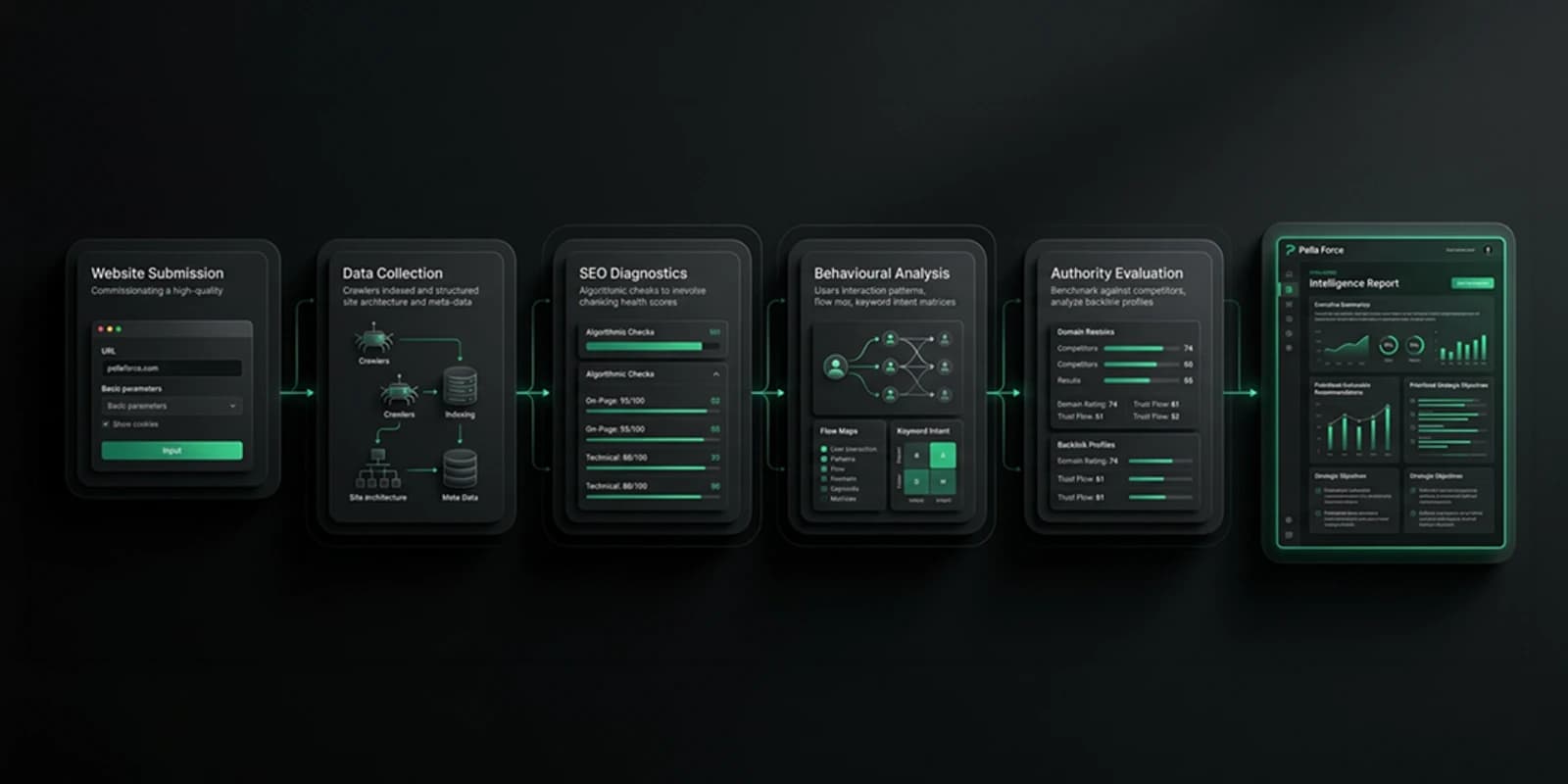
This guide details the process of optimising a website for generative search in a simple, very clear, and future manner. It mainly retains its focus on structure, clarity, and signals of sophistication. Pella Force, through the use of state-of-the-art behavioural analytics and highly informative reports, can be an ideal partner for companies that want to understand their customers' behaviour deeply.
Understanding Generative Search and AI-Driven Engines
Generative search engines use large language models in order to understand the meaning of the content, the relationships between entities, the topical depth, and the degree of contextual relevance, etc. These machines go through the material in the same way that a human would, evaluating the thoroughness of a subject discussion, the way different ideas are connected, and the overall purpose of the content for a real user.
Instead of ranking pages only by keywords, AI-driven engines look at:
Topical authority across an entire site
Semantic relationships between ideas
Clarity of explanations
Evidence of expertise and trust
User engagement patterns and behaviour signals
What matters most in today's optimisation is becoming a trustworthy source of information rather than a place where one can find vocabulary items.
Generative engines heavily depend on the clarity of the topic. Basically, the first step in a strong optimisation strategy is to figure out the main topics and related entities your brand stands for. So, each major topic derives a lot of good leads from the cluster of supportive pages that deal with sub-themes, applications, examples, and explanations.
Take the example of a page dealing with "Generative Search Optimisation". Such a page becomes very powerful when it is supported by content on semantic search, structured data, user intent, and AI content evaluation. The scaffolding which is inspired by this shows that AI systems can easily understand your site as a knowledge hub that is packed with coherent pieces of information.
Content analysis reports by Pella Force assist brands in finding out what people really delve into, compare, and interact with.
Write for Understanding, Depth, and Flow
AI-based algorithms like to see content that thoroughly and naturally explains the concepts. A major factor here is the writing style.
Effective generative-ready content includes:
Clear introductions that define the topic
Logical progression from basics to advanced insights
Natural language that mirrors expert conversation
Examples and explanations that add clarity
Smooth transitions that connect ideas
Every paragraph should be able to solve a real doubt of the reader. Such a practice is equally beneficial for the understanding of humans and AI models.
Strengthen Semantic Signals Across the Page
Semantic optimisation is all about the meaning, which means looking beyond only the repetition. AI engines can recognise related words, synonyms, and conceptual relationships by themselves.
To strengthen semantic signals:
Use varied language that reflects the topic naturally
Reference related concepts and processes
Explain how ideas connect within a broader system
Use headings that describe intent clearly
For example, the "How AI Interprets Website Content" section heading is much more powerful than the typical heading. As a result, rich semantics assist search engines in properly understanding and giving the correct references.
Optimise Structure for AI Readability
The structure determines how AI processing mechanisms interpret the provided information. Therefore, well-structured, neat, and well-organised formatting significantly increases the chances of being understood and found.
Best practices include:
Clear H1, H2, and H3 hierarchy
Short paragraphs focused on one idea
Bullet points for grouped concepts
Descriptive subheadings aligned with search intent
This way generative models can pull out exact answers, summaries, and quotes from your content.
Prepare Content for AI Summaries and Answers
This way generative models can pull out exact answers, summaries, and quotes from your content.
Useful techniques include:
Concise definitions near the top of sections
Step-by-step explanations where relevant
Question-based subheadings
Clear conclusions that reinforce key points
This stance allows the AI systems to present your content as a trusted source during conversational and answer-based searches.
Conclusion
Preparing content for generative and AI-based search engines is basically about packaging the content in a way that smart machines are able to "see" and "understand" knowledge. Clear language, neat structure, semantic depth, and conformance to human behaviours are the frontier features of this new field. Besides, the brands that engage in insight-driven optimisation are the ones that continue to hold great authority and visibility in the ever-evolving world of search. Connect with us at Pella Force for on-point analysis reports.
Frequently Asked Questions
What makes generative search different from traditional search?
Generative search focuses on meaning, context, and understanding rather than keyword matching, delivering insight-based responses instead of simple link lists.
How does content structure influence AI-driven engines?
Clear headings, logical flow, and concise sections assist AI systems in interpreting, summarising, and referencing content accurately.
Why does topical authority matter for generative search?
Topical authority signals expertise and reliability, encouraging AI engines to treat a site as a trusted knowledge source.
How does behavioural data support generative search optimisation?
Behavioural data reveals real audience interests and decision patterns, guiding content creation that aligns with user intent and engagement.
How does Pella Force support brands in this space?
Pella Force delivers advanced behavioural analytics reports that assist brands in understanding audience behaviour, refining strategies, and making insight-driven decisions aligned with AI-led search evolution.
What Is Generative Engine Optimisation (GEO) and Why Does It Matter in 2026?
Generative Engine Optimisation (GEO) is the strategic practice of adapting your website's content, structure, and authority signals to appear as a cited source in AI-powered search engines like Google AI Overviews, ChatGPT, Perplexity, and Microsoft Copilot.
GEO is the evolution of traditional SEO — designed for AI systems that generate answers, not just list links
It focuses on content clarity, topical authority, structured data, and trust signals
AI engines prioritise sources they can extract, summarise, and confidently cite
Without GEO, your site can lose organic visibility even if it currently ranks on Page 1
Brands with strong GEO foundations are already dominating AI search share of voice in 2026
Pella Force Tip: At pellaforce.com, our Search Visibility Analysis and Digital Intelligence Reports track how well your brand appears in AI-generated search responses — giving you a measurable GEO benchmark.
How Do I Optimise My Website Content for Google AI Overviews?
To rank in Google AI Overviews, your content must be directly answerable, factually structured, and backed by E-E-A-T signals (Experience, Expertise, Authoritativeness, and Trustworthiness).
Write clear, concise answers of 40–60 words immediately below question-based headings
Use FAQ schema, How To schema, and Article schema to help Google parse your content
Cover topics comprehensively with pillar pages + supporting cluster content
Cite credible sources, statistics, and expert opinions within your content
Avoid thin, generic content — AI overviews favour depth and topical specificity
Ensure fast load times (LCP < 2.5s) and mobile responsiveness
Pella Force Tip: Our SEO Analysis & Website Audit Service identifies which of your pages have AI Overview citation potential — and what structural fixes are needed to unlock Position Zero.
What Is the Difference Between SEO, GEO, and AEO — and Which Should I Focus On?
SEO, GEO, and AEO are three complementary but distinct strategies for modern search visibility.
Strategy
Full Form
Primary Goal
Key Channels
SEO
Search Engine Optimisation
Rank on Google blue-link results
Google, Bing
GEO
Generative Engine Optimisation
Get cited in AI-generated answers
ChatGPT, Gemini, Perplexity
AEO
Answer Engine Optimisation
Appear in direct answer boxes
Featured snippets, PAA, Voice
All three share the same foundation: quality content, technical health, and authority
In 2026, a complete search strategy must include all three layers to capture both traditional and AI-driven traffic
GEO tactics like schema markup and authoritative content actually strengthen, not weaken, traditional SEO
Pella Force Tip: Pella Force offers integrated SEO + GEO + AEO strategy services — ensuring your brand captures traffic from Google SERPs, AI Overviews, and conversational AI engines simultaneously.
How Do I Make My Website Crawlable by AI Search Engines Like ChatGPT and Perplexity?
AI search engines use their own crawlers (GPTBot, ClaudeBot, PerplexityBot) that behave differently from Google's crawler — requiring specific technical configurations.
Check your robots.txt — ensure you're not accidentally blocking GPTBot, ClaudeBot, or PerplexityBot
Create an llms.txt file at your root domain (e.g., yourdomain.com/llms.txt) to guide AI crawlers to your best content
Reduce JavaScript dependency — AI bots primarily read static HTML; dynamic JS content can be invisible to them
Use semantic HTML structure with proper H1–H3 hierarchy and descriptive alt text
Serve critical content as server-side rendered (SSR) HTML, not client-side JavaScript
Conduct a monthly AI crawlability audit to identify and fix gaps
What Schema Markup Is Most Effective for AI Search and Featured Snippets?
Schema markup is one of the most direct signals you can send to both Google and AI engines about what your content means and how it should be used.
FAQPage schema — triggers FAQ rich results and feeds Q&A directly into AI engines
HowTo schema — ideal for step-by-step guides; frequently pulled into Google AI Overviews
Organization schema — establishes brand identity and knowledge panel data
Breadcrumb schema — improves content hierarchy understanding for both Google and AI parsers
Implement all schema using JSON-LD format in your <head> tag for cleanest AI parsing
Pella Force's On-Page SEO Service includes comprehensive schema implementation across FAQ, HowTo, Article, and Organization types — directly boosting your featured snippet and AI citation eligibility.
How Does E-E-A-T Influence AI Search Rankings and Generative Engine Citations?
E-E-A-T (Experience, Expertise, Authoritativeness, Trustworthiness) is the primary quality signal that both Google AI Overviews and AI engines like ChatGPT use to decide which sources to cite.
Experience: Show real-world application of knowledge — case studies, data, and first-hand examples
Expertise: Assign content to named authors with verifiable credentials or author bio pages
Authoritativeness: Build backlinks from reputable, topically relevant domains — LLMs consider your overall digital footprint
Trustworthiness: Maintain factual accuracy, consistent brand messaging, and transparent citations
Brands with strong E-E-A-T signals are significantly more likely to be cited in AI-generated responses
Prioritise original data, expert quotes, and industry-specific insights over generic recycled content
Our Brand Digital Oversight Service monitors your E-E-A-T signals across all platforms — including backlink profile, author authority, and brand citation consistency in AI search engines.
What Type of Content Format Does AI Prefer for Generating Answers?
AI engines are designed to extract, summarise, and cite — making content structure just as important as content quality.
Use H2 and H3 headers framed as questions to signal answerable content to AI systems
Write short, declarative sentences — AI prefers content that's easy to extract without paraphrasing
Structure answers with bullet points and numbered lists immediately below question headers
Aim for topical depth over word count — 600–1,000 words covering a subject thoroughly outperforms a 3,000-word generic post
Include original data, statistics, and expert insights — AI heavily weights factual, citable content
Maintain factual consistency throughout — contradictions reduce an AI model's confidence in your source
How Do I Track My Website's Visibility in AI Search Engines Like Perplexity, ChatGPT, and Google AI Overview?
Tracking AI search visibility requires a new set of metrics beyond traditional Google Search Console rankings.
Share of Voice — how frequently your brand appears across AI responses on target queries
Citation Count & Citation Score — how often AI engines cite your domain as a source
Sentiment Index — whether AI responses describe your brand positively, neutrally, or negatively
Competitive Rank — your AI share of voice vs. direct competitors on the same queries
Tools like Profound, Semrush AI Toolkit, and Siftly.ai now offer dedicated AI visibility dashboardsleadwalnut+1
Review Google Search Console for AI Overview appearance data alongside traditional SERP performance
Pella Force's Digital Intelligence Reports include dedicated AI search visibility tracking — monitoring your citation rate across ChatGPT, Perplexity, Google AI Overview, and Gemini.
How Important Are Backlinks for Ranking in AI-Driven Search Engines?
Backlinks remain critically important for AI search — but the reason is different from traditional SEO. AI engines use your site's overall digital footprint and authority signals to decide credibility and citation worthiness.
High-authority backlinks signal to AI models that your brand is a recognised and trustworthy source
Topically relevant backlinks carry more GEO weight than generic high-DA links
Listings in industry directories, review platforms, and authoritative listicles directly boost AI citation likelihood
Active presence on forums, Q&A platforms (Quora, Reddit), and social proof channels increases AI brand recognition
Building backlinks from media mentions, PR, and thought leadership articles creates the strongest GEO authority signal
Consistency of your brand name, description, and NAP across all external sources reduces AI ambiguity
What Are the Core Technical SEO Requirements for Generative Search Optimisation in 2026?
Technical SEO forms the foundation of GEO — without it, even the best content remains invisible to AI crawlers and search engines.
HTTPS enabled across all pages — a baseline trust signal for both Google and AI engines
Core Web Vitals pass — LCP under 2.5s, FID under 100ms, CLS under 0.1
Mobile-first design with speed under 1.8 seconds on mobile
robots.txt configured to allow GPTBot, ClaudeBot, PerplexityBot
llms.txt file created at your root domain with your key content pages listed
Clean HTML architecture with minimal JavaScript for critical content pages
Sitemap.xml up to date and submitted to Google Search Console
Our Technical SEO Audit covers every point on the GEO technical checklist above — with a prioritised fix list so your team knows exactly where to start.