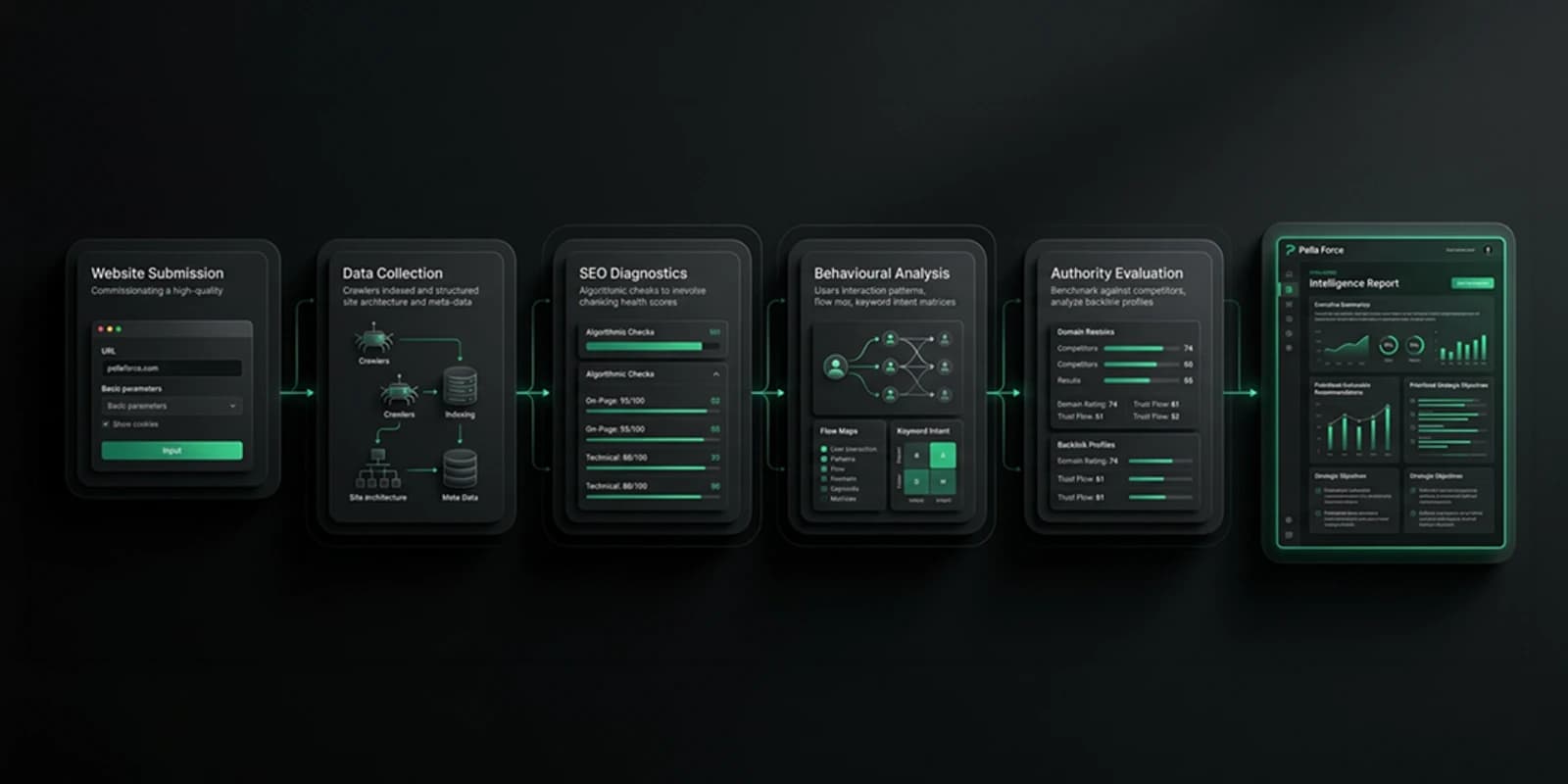
Digital Intelligence for Long-Term Brand Positioning | Pella Force
Digital Intelligence as a Foundation for Long-Term Brand Positioning
Posted 2/18/2026
12 min read
A
By Atul Lohar
How Digital Intelligence Builds Long-Term Brand Positioning and Authority
Digital ecosystems have revolutionized the way brands build and maintain their market positions. Along with creativity or message consistency behavioural data, AI analysis, search authority, and user experience signals are also important. Digital intelligence makes sense of these various factors and puts them together into a single strategy.
Instead of looking at isolated data points, brands identify ways in which they are getting perceived and where the gaps in authority are by looking at the whole pattern. Your brand perception is the cornerstone of your long-term positioning. Companies that make their decisions based on intelligence have higher credibility, resilience, and competitive advantage that also increases over time.
Extending the Concept of Positioning
In the past, brand positioning was mainly associated with elements such as slogans, campaigns, and visual identity. Certainly, these brand elements are still important. However, nowadays, positioning is influenced by factors such as search visibility, behavioural engagement, content depth, and cross-platform consistency.
Digital intelligence is the link between these different factors. It shows whether your brand is considered, among other things, as authoritative, trustworthy, and relevant. Your future positioning is a result of a combination of marketing messages and the way digital ecosystems continuously confirm your brand presence.
Authority as a Measurable Asset
Normally, authority is thought of in terms of concepts and ideas. However, in fact, it is something that can be quantified. Search dominance, semantic coverage, backlink quality, behavioural retention, and AI recognition patterns collectively reveal how strong the authority is.
Thus, when brands keep a watchful eye on these signals and act on them strategically, their market positioning becomes more of an intentional act rather than a fortunate moment. Digital intelligence makes it possible for a brand to establish its credibility in a systematic fashion. It makes sure that their expertise is always reinforced through different search engines, AI systems, and through their audience interactions.
Core Pillars of Intelligence, Driven Positioning
Essentially, the pillars that underpin intelligence-driven positioning are such that the signals at the core of the strong and enduring brand positioning are digital and interrelated. They serve to reinforce authority, trust, and consistency at different times.
These pillars translate intelligence into long-term strategic strength.
Behavioural Consistency
Businesses expect users to engage deeper with the brand. For example, the tools that are used to gather intelligence assist in figuring out the behavioural patterns of your customers. After all, repeated engagement patterns, return visits, and multi-touch interactions are things that normally happen when people start trusting one another.
Search & Semantic Visibility
The brand's positioning unfolds depending on how clearly your brand is seen by the searchers when they are typing in their search queries. Besides, semantic intelligence is there to make sure that your authority grows by isolated keywords and full topics as well.
Content Depth & Expertise Signals
Poorly written or superficial content is the one that dilutes or eats away at your brand's positioning. Well-structured, statement-rich, and informative content enhances the brand's authority perception among the users.
Experience Alignment
When customers have a hard time accessing your solutions, then the strength of your brand will be at stake. However, when you choose to go for intelligence-led UX diagnostics, your digital experience will assist your positioning efforts rather than discredit them.
Compounding Impact Through Strategic Intelligence
Short-term brand campaigns cannot be the foundation for long-term positioning. It is a compound of consistency. Each optimised webpage, each refined behavioural insight, and each authority signal fortify the brand equity over time.
Brands that have intelligence frameworks as their main guide to decision-making will not be that reactive and move away from the brand's core. Instead of always being after the latest fad, they will be creating structured authority layers that are in line with the ever-changing market behaviour that is ever-changing. This brings about visibility, trust, and competitive differentiation.
From Data Collection to Strategic Direction
Merely having raw data is insufficient. One can only discern a strategic direction when one filters, interprets, and correlates meaningful signals with the long-term brand objectives.
Signal Filtering Over Data Overload
Having more data rarely means that you have better positioning. Intelligence is a filter for noise and it prioritises those signals that have a direct bearing on one's authority and trust.
Cross-Platform Alignment
When a brand's messaging and behavioural signals are different across platforms, the brand's positioning becomes vulnerable. With integrated intelligence, one can be sure of the consistency of search, social, and owned media.
Reputation Pattern Monitoring
Usually, minor changes in sentiment or engagement are the first signs of a positioning drift. The brand's reputation is monitored strategically so that small inconsistencies fail to cause irreversible damage to the brand's equity.
The Role of Structured Intelligence Partners
Internally creating digital intelligence systems can be quite complicated. It also calls for a combination of skills in UX analysis, behavioural modelling, AI visibility interpretation, and authority mapping, among others.
A company like Pella Force is a specialist in turning scattered digital data into a framework of strategic intelligence. Using the alignment of behavioural signals, search positioning, and AI interpretation, the brands become more focused, which in turn makes their market positioning more sustainable and stronger.
Conclusion
Long-term brand positioning is established by consistently reinforcing authority, trust, and strategic clarity through the digital touchpoints on which the brand is built.
Digital intelligence gives an organisation the opportunity to track behavioural changes and increase visibility to AI. It also retraces the experience alignment before the concerns become too big.
By changing data into structured insight, an organisation lays a foundation that leads to staying relevant, having authority, and growing even as the digital landscape keeps on changing.
Frequently Asked Questions
Q: What is digital intelligence, and how does it relate to long-term brand positioning?
Digital intelligence is the strategic collection, analysis, and application of digital data — from search behavior, social media signals, competitive metrics, and AI-driven insights — to inform and strengthen a brand's positioning over time.
Defines a brand's current digital footprint across search engines, social platforms, and AI-powered systems
Translates raw data into brand decisions — messaging, audience targeting, content direction
Enables proactive positioning rather than reactive marketing adjustments
Bridges the gap between brand perception and market reality
Supports sustainable growth by aligning strategy with real-time behavioral data
PellaForce DigiGuard acts as an independent digital guardian, auditing all digital assets and delivering data-driven insights that form the foundation of a structured brand positioning strategy.
Q: How does digital intelligence help businesses build a long-term brand positioning strategy?
Digital intelligence transforms brand strategy from guesswork into a continuously refined, data-backed process that evolves with market shifts, audience behavior, and competitive landscapes.
Tracks search trends and audience intent over time to anticipate market direction
Monitors brand sentiment across digital touchpoints to protect brand equity
Identifies content gaps and keyword opportunities that align with brand authority
Benchmarks performance against competitors to reveal strategic white space
Aligns marketing investment with channels delivering the highest brand impact
Q: What are the core components of digital intelligence used in brand positioning?
Effective digital intelligence for brand positioning is built across five interconnected data layers that together create a 360-degree view of a brand's digital authority and market relevance.
Search Intelligence: Keyword rankings, search intent mapping, and SEO visibility signals
Competitive Intelligence: Competitor gap analysis, market benchmarking, and opportunity identification
Social Intelligence: Platform-specific engagement, audience behavior, and sentiment analysis
AI Visibility Intelligence: Brand mentions, citations, and relevance in AI search engines (ChatGPT, Perplexity, Gemini)
Website Intelligence: User behaviour flows, conversion patterns, and technical performance data
PellaForce through its suite of digital analysis reports — SEO reports, social media audits, AI visibility reports, keyword research, and website analysis — in one structured framework.
Q: Why is data-driven brand positioning more effective than traditional branding approaches?
Data-driven brand positioning uses real-time behavioural evidence — not assumptions — to build, refine, and sustain a brand's market identity, making it significantly more adaptive and measurable than traditional methods.
Eliminates guesswork by grounding brand decisions in verified consumer data
Enables real-time pivots when market trends or audience preferences shift
Produces measurable outcomes through KPIs, conversion data, and engagement signals
Uncovers hidden audience segments that traditional research methods overlook
Reduces wasted marketing spend by focusing resources on high-ROI brand channels
Q: How does artificial intelligence enhance digital intelligence for brand positioning?
AI supercharges digital intelligence by processing large-scale data in real time, uncovering patterns invisible to manual analysis, and enabling brands to position themselves proactively in both search and AI-powered discovery ecosystems.
Real-time trend detection across search, social, and purchase behaviour patterns
Predictive analytics that forecast audience shifts and competitive movements
Sentiment analysis at scale to monitor brand perception continuously
AI search visibility — ensuring brand content is cited in ChatGPT, Perplexity, and Google AI Overviews
Q: How does SEO function as a digital intelligence tool for long-term brand positioning?
SEO is not just a traffic channel — it is a powerful brand intelligence system that reveals how audiences perceive, search for, and engage with a brand, making it central to sustainable long-term positioning.
Keyword data reveals brand perception — how audiences describe a brand's value
Organic rankings signal brand authority and trustworthiness to both users and algorithms
Search intent analysis aligns brand messaging with real user needs at each funnel stage
Technical SEO health reflects brand professionalism and digital credibility
Competitor SEO benchmarking identifies positioning gaps your brand can own
PellaForce's SEO Analysis Reports cover on-page optimization, technical structure, search visibility signals, content alignment, and competitive benchmarking — building SEO as a long-term brand authority engine.
Q: How do digital analysis reports contribute to improving brand visibility and authority?
Digital analysis reports convert disconnected data from multiple platforms into a unified, actionable intelligence layer — Giving brands the clarity to act on data, not assumptions.
Website reports identify UX issues that erode brand credibility
SEO reports reveal search visibility gaps affecting brand discoverability
Social media reports uncover engagement patterns that shape brand perception
Keyword reports align content investments with actual audience search demand
AI visibility reports ensure brand authority is reflected in AI-driven search results
Q: What is AI visibility, and why is it critical for brand positioning in 2026?
AI visibility refers to how frequently, accurately, and authoritatively a brand is cited, referenced, or recommended by AI-powered search engines such as ChatGPT, Google AI Overviews, Perplexity, and Gemini.
AI search is reshaping discovery — millions of users now find brands through AI answers, not just blue links
Brands not optimized for AI citations risk invisibility despite strong traditional SEO performance
AI visibility depends on structured content, digital authority signals, consistent brand messaging, and citation-worthy sources
Reputation in AI ecosystems directly influences brand trust and purchasing decisions
Positioning in AI answers is a new form of "Position Zero" — earned through digital intelligence, not paid placement
Q: How can small and medium-sized businesses use digital intelligence to compete on brand positioning?
SMBs can leverage digital intelligence to compete with larger brands by making smarter, data-informed decisions with limited budgets — focusing resources where digital impact is highest and brand differentiation is clearest.
Start with a digital audit to understand where the brand currently stands vs. competitors
Prioritize high-intent SEO keywords where smaller brands can realistically compete and own positioning
Monitor social engagement data to discover which brand messages genuinely resonate
Use AI visibility reports to ensure consistent brand representation in AI search ecosystems
Invest in strategy reports rather than scattered ad spend to build compounding brand equity
Q: What KPIs and metrics measure the success of digital intelligence in brand positioning?
Measuring digital intelligence success in brand positioning requires tracking both visibility metrics and brand authority signals across search, social, and AI platforms to assess long-term positioning strength.
Organic search rankings for brand-defining and category keywords
Share of voice vs. competitors in search results and AI-generated answers
Brand mention frequency and sentiment across platforms and AI systems
Website engagement quality — time on site, bounce rate, conversion depth
Social platform authority scores and audience growth quality over time
AI citation rate — how often the brand appears in AI search summaries
Q: What tools are used for digital brand intelligence?
Digital brand intelligence relies on tools like Google Search Console, SEMrush, GA4, social analytics platforms, and AI visibility audit tools. Combined with professional reporting services like PellaForce, these tools deliver structured insights across SEO, social media, website performance, and AI-driven discovery ecosystems.
Q: What is the relationship between SEO and brand positioning?
SEO directly shapes brand positioning by determining how audiences discover and perceive a brand through search. High organic rankings signal authority; keyword alignment reflects brand relevance; and search intent mapping ensures brand messaging connects with real user needs — all critical elements of sustainable brand positioning.
Q: How does competitive analysis support brand positioning?
Competitive analysis reveals gaps in the market where a brand can own clear positioning. By studying competitor keyword rankings, content performance, social presence, and AI visibility, brands can identify opportunities for differentiation and focus their digital intelligence strategy on areas of maximum competitive advantage.
Q: What is a digital brand audit?
A digital brand audit is a comprehensive evaluation of a brand's performance across all online channels — website, SEO, social media, content, and AI platforms. Pella Force delivers objective, professional digital audits that go beyond surface-level reports to expose real positioning and performance gaps.
Q: Why is brand consistency important in digital positioning?
Brand consistency across digital channels builds trust, strengthens recognition, and reinforces authority signals for both search engines and AI platforms. Inconsistencies in messaging, visuals, or tone dilute brand positioning and reduce the chances of being cited in AI-generated search answers or earning featured snippet positions.