Technical Website SEO for Business Owners (2026 Guide to Fix & Boost Visibility) | Pella Force
Technical Website SEO for Business Owners: Simple 2026 Guide to Boosting Search Visibility
Posted 6/1/2026
14 min read
A
By Atul Lohar
Technical Website SEO for Business Owners: How to Boost Search Visibility in 2026
Technical SEO Made Simple: What Every Business Owner Must Do in 2026 to Rank Higher
A Smart Overview
The process of optimising a website’s backend structure and architecture is counted as technical SEO. The behind-the-scenes functions, referred to as the technical website SEO analysis, drive the website's performance and make it search-friendly. We focus on the website’s speed, structure, crawlability, and framework, and empower the brand to appear in all leading search results. We run these functions for the business owners and entrepreneurs to streamline the core functionality and digital performance of their brand website. Take a close look to know how seamlessly we conduct these technical SEO operations and elevate the brand value and revenue.
Technical SEO is the Backbone of Website Performance: The Checklist for the Analysis
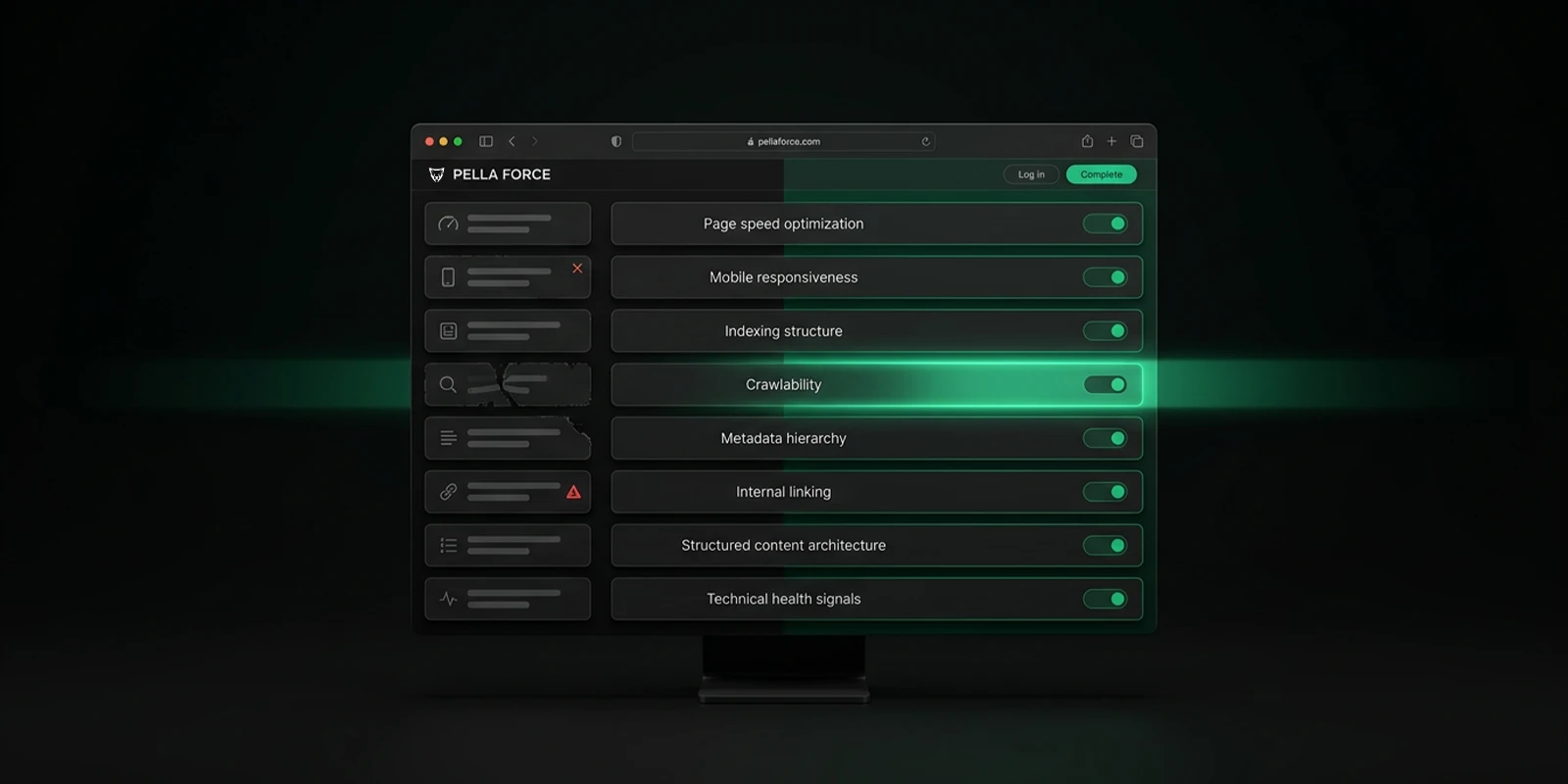
We dive into the backend framework of every website to understand the functionalities, roadblocks and factors that are impacting its reachability and visibility. The main purpose of Pella Force is to run a well-structured technical SEO audit to ensure that search engines and AI-driven crawlers can access and index your brand content. We empower the founders, start-up owners and entrepreneurs by making their brand visible in the domain. We follow a strategic checklist while performing this analysis.
Indexing and Crawlability: We check how seamlessly the search bots can navigate the brand website. We have the expertise to check XML sitemaps and URL redirects and identify duplicate content.
Speed and Performance: Pella Force checks page loading time and core web vitals to understand how the website performs. With these assessments, we assist the business owners in understanding the quality of user experience that their website delivers.
Mobile-Responsiveness- In today’s world of a “mobile-first” approach, one of the most crucial checkpoints of technical website SEO analysis is to check the mobile responsiveness. We analyse if the website is responsive and operates smoothly on smartphones and tablets.
Schema and Structured Data- Our team specialises in assessing the backend code that empowers search engines to understand the intent of the page. We assist business owners by analysing their products and reviews and siting their website in all AI-powered responses.
Site Infrastructure – We also assist in analysing how the pages of the brand’s website stay connected. A well-streamlined internal linking system assists search engines in navigating the website while creating a user-friendly content path.
Security-By analysing whether the website uses SSL certificates and keeps the user data safe and protected, we ensure the startup founders and owners gain trust and credibility.
Decoding Core Web Vitals Analysis
The collection of signals to assess real-world performance is called core web vitals. Through this analysis, we conduct the technical SEO performance report for brands and evaluate the responsiveness, speed and visibility. This assists business owners in understanding whether their brands deliver a seamless user experience or need to work on areas of improvement.
Types of Core Web Vitals
Largest Contentful Paint (LCP)
This measures how well and how smoothly the heaviest video or largest image appears within the user’s screen.This assists in evaluating how a user perceives the webpage and how Google ranks it.
Cumulative Layout Shift (CLS)
It is one of the most crucial core web vitals, used to analyse the visibility factor. Through this technical website SEO analysis, we track the movements of the unexpected page elements and ensure a profound user experience.
Interaction to Next Paint (INP)
The promptness on how quickly a website reacts to the user interactions is measured by INP.We evaluate this INP vitals by clicks, button presses and taps.
Simplifying Crawlability for Every Business
In the realm of technical website SEO analysis, crawlability is an integral part that refers to how easily a search engine discovers a brand website page. We use search engines like Google to discover web pages by crawling. Pella Force uses computer-run programs, referred to as the web crawlers or bots, to trace the link between the pages and make it reachable and discoverable.
Take a look at the vital factors that optimise crawlability across all brands.
Website Architecture- It works best with a clear and strategic hierarchical structure. Homepage, Category, Sub-category and Product are a tried and tested format that ensures the most effective visibility.
Search engines like Google always explore and reach the website from one page to another. So a proper framework of the pages is impactful and assists in boosting visibility.
Internal Linking- We ensure that every page is strategically linked and discoverable by the search engines. Pella Force eliminates isolated or orphan pages, making the brand website completely visible through search engines and AI responses.
Crawl Budget- We have the expertise to optimise our crawl budget so that the bots focus on the valuable pages of the website. This prevents the appearance and duplication of low-quality content pages.
Server and Page Speed: Pella Force optimises the server performance and page speed. We ensure the absence of slow loading speed and server glitches, as these upset the crawler, impacting the visibility.
Website Architecture in SEO: The Power Behind Search Visibility
We run website architecture analysis to assess how the pages are planned, designed, structured and linked. A well-framed architecture ensures a seamless navigation flow, makes search engines understand the importance of the pages and boosts content discoverability.
Our expertise in conducting this analysis and generating a detailed search ranking report for our business owners is simply unmatched. We plan a robust site architecture, driving visibility in local and Global markets. Explore how a website’s structure fosters search visibility.
URL Structure- We design the most effective URL structures that are seamlessly read and assessed by the search engines. These structures are rich in content and align with all AI-generated target queries.
Site Crawlability- We use crawlability in keyword and search intent analysis to find how seamlessly the search engines navigate through the website pages. It assists the user to understand the intent of the pages, making it visible and discoverable.
HTTPS Security- This is for the website’s security. This also ensures better user experience, effectiveness of PPC campaigns and confidentiality of users’ data.
Internal Linking- With the strategic internal linking, users and search engines can navigate to any page on the site seamlessly. We empower the business owners and founders by setting up a flow between content and pages and making it highly visible.
Content and Keywords-We also generate a keyword research report by analysing the optimal use of target keywords, boosting reachability and visibility. Our site structure analysis process also ensures the website content quality is relevant and top-notch. We filter out all duplicate and low-quality content that Google tags as spam.
User Experience- Through this analytical process, we assess time spent on site, page loading time, bounce rate, and click-through rates to boost user experience to the next level.
Interpreting A Technical SEO Analysis Report: A Comprehensive Guide for Business Owners
The idea of decoding and understanding a technical website SEO analysis report without a developer’s skill and knowledge is to transform complex jargon into simple and easy-to-understand terms.**** We assist business owners, entrepreneurs and start-up founders to know what is beneficial for their website’s functionalities and visibility. Instead of getting hassled with technical terminologies, Pella Force encourages people to understand and adapt ways to drive stronger search performance.
Take a deep dive to know what all one should try to interpret, refer to and read for a smooth and easy interpretation of the analysis.
To optimise the website’s technical SEO audit, business owners must know about:
How smoothly and quickly do the site pages load for the target users?
Can the top search engines find and locate your pages?
How does the search engine understand the content?
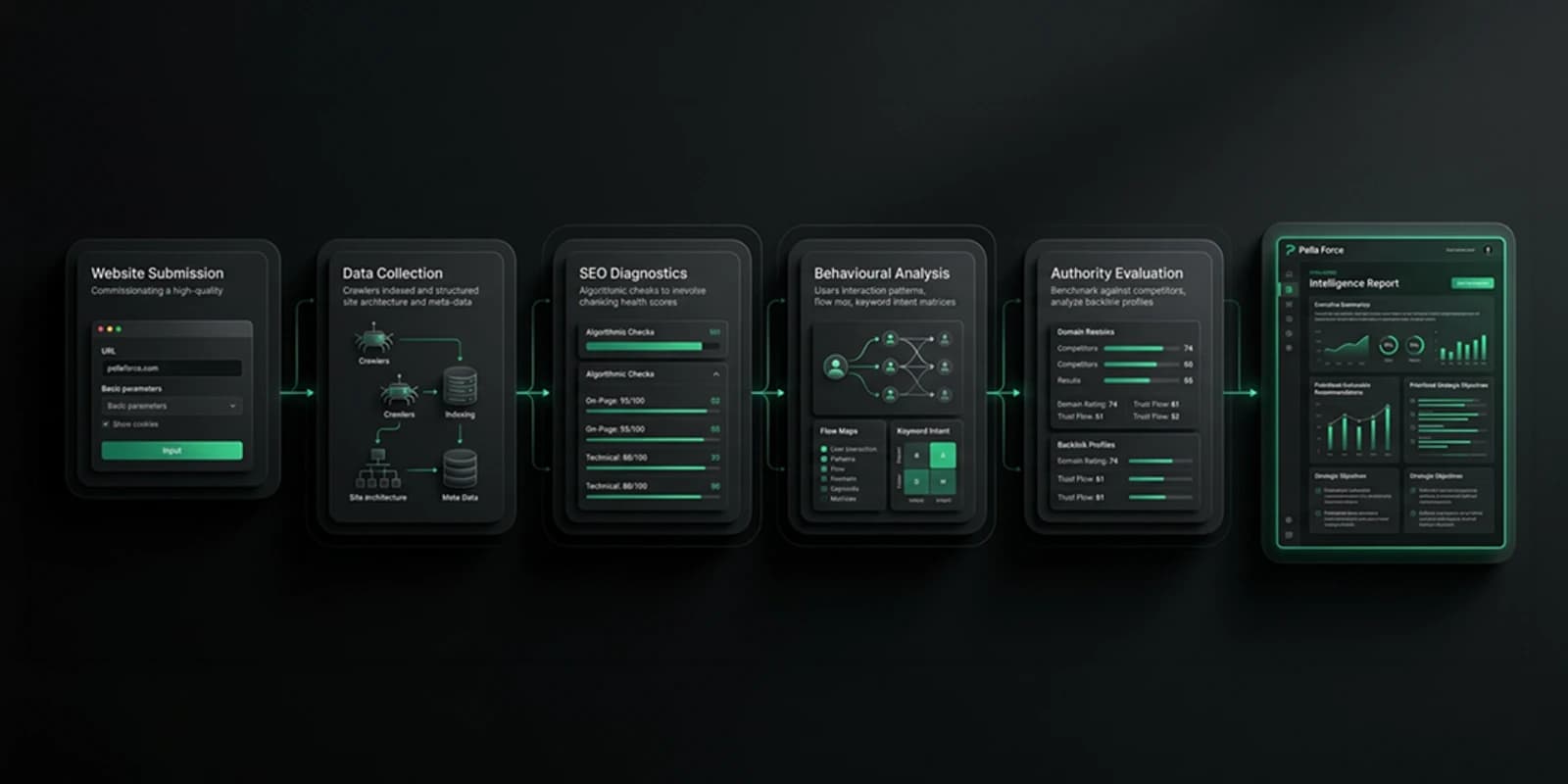
This is how we generate analysis reports and assist the founders and professionals in comprehending the reports
We encourage you to assess the LCP to know how fast the main content gets loaded.
Check the CLS to know how frequently the page jumps and bounces
By INP, you will understand how your brand’s page will respond to a user’s query and targeted search.
If you locate a 404 Message, understand that any page of the website is broken or deleted.
If there is a 5xx Server Message, it signifies that the server is unable to load the page.
Valid schema or structured data endorses that the search engines like Google have understood the intent and content of your website.
We assist you in checking for mobile usability glitches and ensure that you have a logical, clean URL structure.
Pella Force focuses on using a mobile-responsive website theme to fit the pages seamlessly into various screens.
We always encourage business owners to assess the SEO performance report for brands and focus on the revenue-generating pages, like the product page. Redundant pages like the old blogs can be kept in the backseat while fixing the glitches in the site structure analysis.
We also assist brand owners in checking the position a page holds in search results for a specific keyword. This gives them a fair idea of the keyword ranking.
Concluding the Thoughts
We run technical website SEO analysis and empower business owners to understand the visibility, reachability and performance of their brand’s websites. From page loading speed and schema markup, mobile-responsiveness to usage keywords, content quality and user experience, our analytical exposure gives clarity on everything. Pella Force analyses business websites so that the search engine crawls and indexes the content, ranking the site effectively. We ensure the website is structured properly and empower the business owners to optimise their digital presence. If you are a start-up founder or an entrepreneur seeking a high ranking in SEO, connect with us and start your transformation right away.
FAQs
How does a crawl budget impact technical website SEO analysis for brands?
A crawl budget determines how many pages a search engine bot can download from your brand’s website within a specific time. This is a crucial part of technical website SEO analysis, as if the crawl budget exceeds, a few relevant pages might go unnoticed. This might impact the website’s search visibility.
How to understand duplicate content in technical SEO analysis?
We understand duplicate content through the 301 Tag, used with canonical tags, or noindex tags. These tags guide search engines to identify and filter out duplicate and low-relevance content.
Which brand segments require technical SEO functions?
We run technical SEO analysis and curate reports for all brands and businesses. However, we find it extremely crucial for e-commerce, multinational enterprises and media.
Are web crawling and web scraping different?
Web crawling and web scraping are different in purpose and functionality. In web crawling, the search bots or crawlers locate, map and index web pages by tracing hyperlinks. Web scraping extracts data from a known page and export them into a definite and strategic format.
How frequently must one go for a technical website SEO analysis?
The frequency of this SEO analysis depends on the scope and size of the business and its website, range of products and competition. Ideally, we suggest conducting a technical website SEO analysis every 3-6 months.
What is technical website SEO analysis and why does it matter for business owners in 2026?
Technical website SEO analysis examines a website's backend structure, speed, crawlability, mobile-responsiveness, and schema markup. For business owners and startup founders, it ensures search engines and AI-driven crawlers can access, index, and rank their content effectively — directly impacting search visibility, user experience, and revenue growth.
What does a technical SEO audit checklist include for brand websites?
A technical SEO audit checklist for brand websites typically covers:
Crawlability and indexing — XML sitemaps, URL redirects, duplicate content
Page speed and Core Web Vitals — LCP, CLS, and INP scores
Mobile responsiveness — smartphone and tablet compatibility
Schema and structured data — backend code for AI-powered search results
Internal linking and site architecture — navigation flow and content discoverability
HTTPS security — SSL certificates and user data protection
How do Core Web Vitals affect technical SEO performance for websites?
Core Web Vitals are Google's real-world performance signals that directly influence search rankings. They include:
LCP (Largest Contentful Paint) — measures how fast the heaviest content loads
CLS (Cumulative Layout Shift) — tracks unexpected page element movement
INP (Interaction to Next Paint) — measures page responsiveness to user clicks and taps
Poor Core Web Vitals scores signal weak user experience and lower search ranking potential.
What is crawl budget and how does it impact technical website SEO?
A crawl budget is the number of pages a search engine bot can crawl on your website within a set time. If your crawl budget is wasted on low-quality or duplicate pages, important product and service pages may go unindexed. Optimising crawl budget ensures search engines prioritise your most valuable, revenue-generating pages.
Why is mobile responsiveness critical in technical SEO analysis for 2026?
Google follows a mobile-first indexing approach, meaning it primarily uses the mobile version of your website for ranking. A mobile-responsive site ensures:
Seamless display across smartphones and tablets
Better Core Web Vitals scores
Improved user experience signals
Higher eligibility for Google AI Overview citations and featured snippets
Brands that lack mobile optimisation risk losing visibility in both traditional and AI-generated search results.
How does schema markup help websites appear in AI-generated search responses?
Schema markup is structured backend code that helps search engines and AI systems like Google, ChatGPT, and Perplexity understand your page's content and intent. Properly implemented schema for products, reviews, FAQs, and services increases eligibility for:
Google rich results and featured snippets
AI Overview citations
People Also Ask boxes
Voice search responses
How does website architecture affect search engine visibility and rankings?
Website architecture defines how pages are planned, structured, and linked together. A clear hierarchical format — Homepage → Category → Sub-category → Product — helps search engines navigate and understand content importance. Strong site architecture improves crawlability, distributes page authority effectively, and boosts discoverability in both local and global search markets.
How do I read and interpret a technical SEO analysis report as a non-technical business owner?
A technical SEO report can be decoded by focusing on key indicators:
LCP score — tells you how fast your main content loads
CLS score — shows how often your page layout shifts unexpectedly
404 errors — indicate broken or deleted pages
5xx server errors — signal server loading failures
Valid schema data — confirms search engines understand your content
Keyword ranking positions — show where your pages appear in search results for target queries
How often should a business owner conduct a technical website SEO analysis?
The recommended frequency for a technical website SEO analysis depends on website size, product range, and competition level. As a general guideline:
Small business websites — every 6 months
E-commerce and enterprise websites — every 3 months
After major site updates or algorithm changes — immediately
Regular audits ensure your site remains visible, crawlable, and competitive in 2026's AI-driven search landscape.
What is the difference between web crawling and web scraping in the context of SEO?
Web crawling and web scraping serve different purposes:
Web crawling — search bots follow hyperlinks to discover, map, and index web pages across the internet for search engine visibility
Web scraping — extracts specific data from known web pages and exports it into a structured format for analysis
Web crawling is fundamental to technical SEO, while web scraping is primarily a data collection method.